Unplugged Live: April 2026
As of April 6, 2026, the live music landscape is experiencing a clear and measurable shift back toward stripped-down performance, where arrangement, songwriting, and vocal delivery take precedence over production scale. Across theaters, churches, listening rooms, and curated performance spaces, acoustic and “unplugged-style” shows are not functioning as side projects or nostalgic throwbacks—they are emerging as a central format for artists at every level. From legacy figures reinterpreting their catalogs to modern touring acts reshaping how audiences engage with live music, the current cycle reflects a renewed emphasis on clarity, intimacy, and musicianship.
At the forefront of this movement is Robert Plant, whose ongoing tour with Saving Grace continues to redefine what a late-career live presentation can look like. Performing with vocalist Suzi Dian, the project is rooted in acoustic arrangements that draw from folk, Americana, and reinterpretations of traditional material. Tonight’s performance at the Count Basie Center for the Arts in Red Bank, New Jersey, followed by a performance at the Cathedral of St. John the Divine, places this approach in venues that emphasize acoustics, atmosphere, and listener focus. These are not scaled-down versions of arena shows; they are deliberately structured performances designed for environments where nuance matters.
That same philosophy is shaping anniversary-driven touring as well. Soul Asylum has returned to the acoustic format to mark three decades since its original unplugged-era work, delivering a series of performances built around stripped-back arrangements. Their upcoming shows at The Vogel on April 16 and in Saratoga Springs later in the month reflect a broader pattern in which legacy acts are revisiting pivotal moments in their catalog through reinterpretation rather than replication. This is not about recreating the past—it is about reframing it for a different type of listening experience.
The contemporary acoustic circuit is equally active, with Gillian Welch and David Rawlings setting a high standard through their “Acoustic Reckoning” tour. Their recent performances, including extended setlists featuring both new material and deep catalog selections, have been defined by precision, restraint, and an emphasis on live musicianship. In an environment where setlist depth and arrangement detail matter more than spectacle, this tour is functioning as a benchmark for how acoustic performance is evolving in 2026.
Newly announced touring also reflects this direction. Darius Rucker has introduced a 20-date U.S. run built around songwriting and storytelling, with a format that frequently leans into stripped-down arrangements. This type of presentation aligns with the broader shift toward performances that prioritize narrative and connection over production, offering audiences a more direct engagement with the material.
The role of acoustic performance within the global live music landscape continues to be defined not by scale, but by immediacy, clarity, and direct connection between artist and audience. Across major tours, one-off appearances, and politically and culturally significant events, stripped-down performances remain a consistent and powerful format for delivering both new material and reinterpreting existing work. Few recent examples illustrate that more clearly than Bruce Springsteen’s acoustic performances of “Streets of Minneapolis,” a song that has quickly become central to his current live presence.
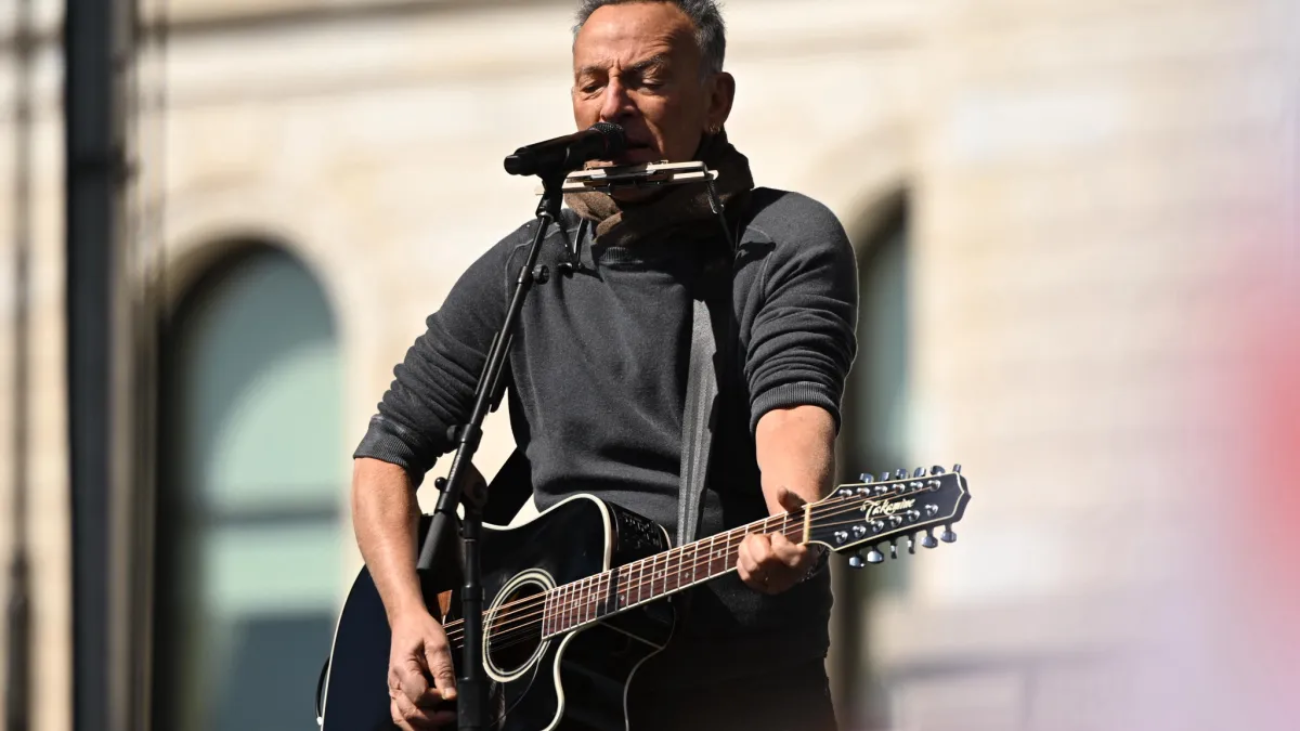
The most prominent performance to date took place on March 28, 2026, at the Minnesota State Capitol in St. Paul during the “No Kings” rally, where Springsteen appeared alone with an acoustic guitar and harmonica in front of a crowd estimated at over 200,000 people. Introduced by Minnesota Governor Tim Walz, the performance was positioned as a focal moment within a larger national protest event. Before beginning the song, Springsteen addressed the crowd directly, referencing the events that inspired the track and setting the tone for what followed. The performance itself was marked by sustained audience engagement, including a coordinated chant that carried through the grounds as the song progressed. In that setting, the acoustic format was not a stylistic choice—it was a functional one, allowing the message of the song to carry without distraction or production.
The origin of “Streets of Minneapolis” traces back to its initial live debut on January 30, 2026, at the First Avenue club, where Springsteen appeared as an unannounced guest during Tom Morello’s Concert of Solidarity & Resistance to Defend Minnesota. Performed in the same solo acoustic format, the song was introduced only days after it was written, in direct response to the fatal shootings of two city residents. That early performance established the structure and tone that would define subsequent versions—minimal instrumentation, direct vocal delivery, and a focus on lyrical clarity.
In the weeks that followed, the song continued to appear in similar acoustic settings, including a performance at Riverside Church on March 23, where Springsteen again presented the material in its most stripped-down form. That approach has remained consistent even as the song has been incorporated into a broader touring context. When performed with the E Street Band during the current arena run, including the tour kickoff at the Target Center on March 31, the arrangement expands significantly, introducing a full-band dynamic that contrasts sharply with the solo acoustic versions. The distinction between these presentations is not subtle. The acoustic performances are defined by immediacy and directness, while the full-band versions operate within the scale and structure of a traditional arena show.
That contrast has become one of the defining elements of Springsteen’s current live approach. While the tour itself is structured as a full-band production, recent performances have consistently incorporated acoustic moments that shift the tone and pacing of the show. This was evident again during a recent television appearance marking the 30th anniversary of Democracy Now!, where Springsteen joined Patti Smith and Michael Stipe for a stripped-down set built around vocal performance and minimal instrumentation.
The current tour schedule continues to reflect that balance. Springsteen performed in Portland on April 3, with the show drawing attention following a medical emergency in the crowd, and is scheduled to appear at the Kia Forum on April 7. Additional dates bring the tour into the Northeast later this month, including April 20 at the Prudential Center, May 8 in Philadelphia, and multiple nights at Madison Square Garden. Within those performances, the inclusion of acoustic segments continues to serve as a structural counterpoint to the larger production, reinforcing the role of stripped-down arrangements within a broader live framework.
Separate from the touring schedule, developments on April 6 added a more somber note, as Springsteen shared that he is “heartbroken” following the death of a former bandmate. Details surrounding the situation remain limited, but the statement reflects the ongoing personal dimension that continues to intersect with his public work.
Taken together, these performances and appearances provide a clear view of how acoustic presentation functions within the current live environment. It is not defined by venue size or format, but by its ability to deliver material with clarity and directness, whether in front of a crowd of hundreds in a club or hundreds of thousands in a public setting. In Springsteen’s case, the consistency of that approach—from First Avenue to the State Capitol steps to arena stages—demonstrates how acoustic performance remains a central tool for both artistic expression and communication.
Within the broader scope of live music in 2026, this model continues to hold relevance. Acoustic sets are not limited to specific genres or formats; they are integrated into tours, special appearances, and standalone events, offering a different kind of engagement that complements larger productions rather than replacing them. The current cycle reflects that balance clearly, with artists using stripped-down performance as a way to present new material, revisit existing work, and connect with audiences in a more direct way.
As the schedule continues to unfold through the spring and into the summer, that role is unlikely to change. Acoustic performance remains a constant presence across the global touring landscape, defined not by trend, but by its continued use as a practical and effective format for live music.
Beyond individual artists, the unplugged format is being expanded through curated experiences and tribute-based productions that reinterpret the concept for new audiences. The ongoing “Unplugged: A Tribute to MTV” tour brings a rotating set of performances across the East Coast, including scheduled stops at The Queen and Jergel’s Rhythm Grille, recreating the stripped-back aesthetic that defined an earlier era while updating it for current touring environments. At the same time, the “90s Unplugged” candlelight concert series introduces a chamber-style interpretation of acoustic music, with string quartet arrangements presented in immersive settings such as the Media Theatre. These formats demonstrate how the unplugged concept continues to evolve, moving beyond a single format into multiple performance models.
At the regional level, the density of acoustic programming across New Jersey and the surrounding area underscores how deeply this format has embedded itself into local touring circuits. In addition to Robert Plant’s Red Bank performance, venues across the region are hosting a range of acoustic events that reflect both stylistic diversity and audience demand. The Atlantic Mandolin Quartet will bring a classical chamber approach to the Zlock Performing Arts Center, while “Harvest & Rust,” a Neil Young-focused acoustic performance, will take place at the Newtown Theatre. Songwriter-driven performances, including an intimate set from Loretta Hagen at the Spanish Pavillion, continue to reinforce the importance of listening-room environments where audience attention is as much a part of the performance as the music itself.
The digital landscape is also contributing to this resurgence. Platforms such as NPR Tiny Desk have become a modern benchmark for stripped-down performance, with recent sessions from artists like Sarah McLachlan, Jill Scott, and Mumford & Sons drawing significant attention. These recordings are not simply promotional content—they are functioning as widely consumed examples of how acoustic performance can be presented in a contemporary context, often reaching audiences that traditional touring alone cannot access.
Simultaneously, physical releases are reinforcing the connection between past and present. Soul Asylum’s decision to issue a double-vinyl release of its unplugged-era material for Record Store Day adds another layer to its current tour, linking live performance with collectible formats that continue to hold value for dedicated listeners.
Taken together, the current state of unplugged and acoustic performance in 2026 reflects a broader recalibration within live music. As large-scale productions continue to dominate certain segments of the industry, there is an equally strong movement toward performances that prioritize clarity, space, and direct connection. Artists are not abandoning scale—they are complementing it with formats that allow their material to exist in a different, often more revealing, context.
For audiences, this shift offers something increasingly rare: the opportunity to engage with music without mediation. No elaborate staging, no excessive production layers—just the song, the voice, and the room. And as April unfolds, that approach is not only sustaining itself—it is expanding, redefining what it means to experience live music in its most essential form.