
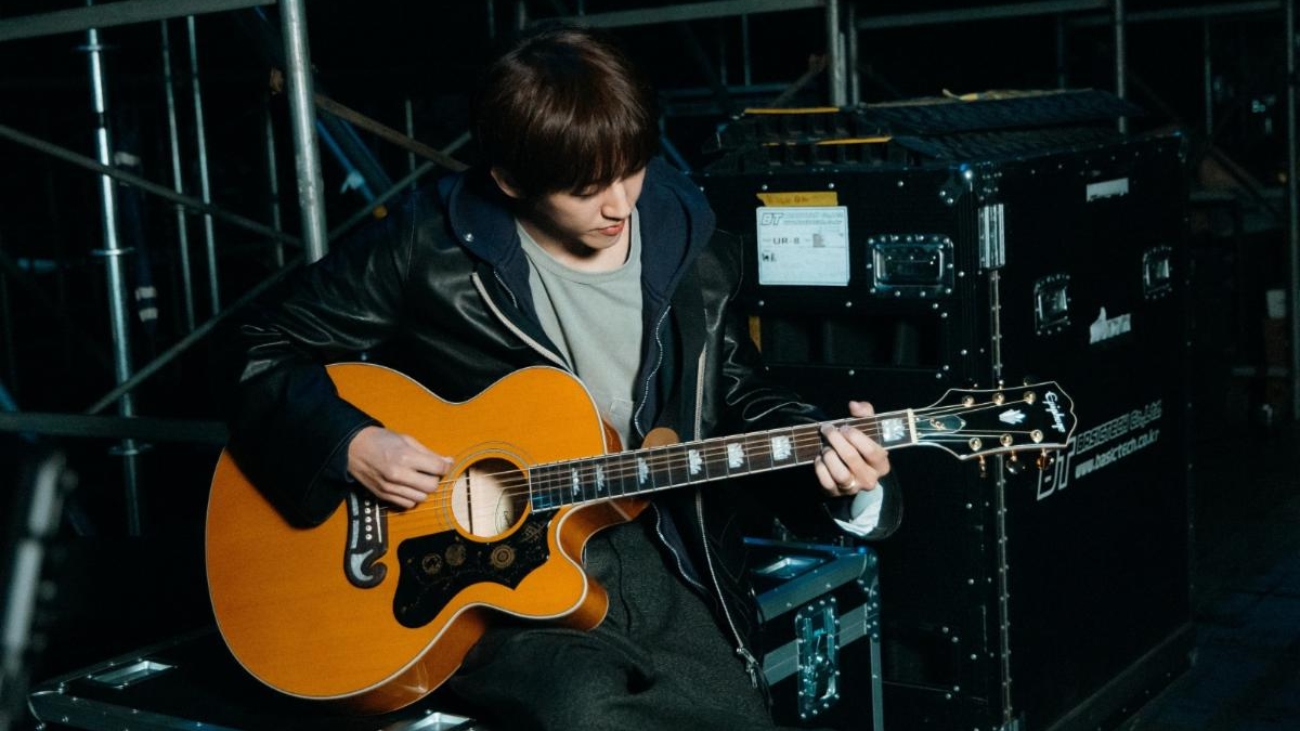
The future of unplugged music is no longer confined to Nashville, London, Los Angeles, or New York. It is expanding outward, crossing languages, genres, continents, and cultural expectations with remarkable speed, and one of the clearest examples of that evolution is now arriving through Epiphone’s newest signature acoustic release. The debut of the Lee Seung Yoon LSY-200 Studio EC is far more than a product announcement—it is a defining cultural moment for modern acoustic music, reflecting how global songwriting, live performance, and artist identity are reshaping the entire acoustic landscape.

With the addition of Lee Seung Yoon to its international artist roster, Epiphone is making a statement that reaches beyond hardware and branding. Lee becomes the company’s first Korean signature artist, signaling a broader recognition of the extraordinary influence Korean musicians now hold across the worldwide live music ecosystem. More importantly, the release reinforces how unplugged and acoustic-centered performance has become a universal language capable of transcending geography and genre entirely.
For Unplugged Live, this release arrives at a particularly important moment. The modern acoustic movement is no longer defined solely by traditional folk or singer-songwriter circles. Contemporary unplugged music now exists at the intersection of indie rock, alternative pop, punk energy, cinematic songwriting, and emotionally charged live performance. Lee Seung Yoon embodies all of those dynamics simultaneously, making him an especially fitting artist for a signature acoustic instrument designed around the realities of modern performance culture.
Built on the foundation of the legendary J-200 platform, the new LSY-200 Studio EC reflects a fascinating collision of heritage craftsmanship and contemporary identity. The guitar retains the commanding silhouette and expansive tonal response associated with the iconic Super Jumbo lineage while introducing artist-specific details that give the instrument its own distinct personality. This is not a cosmetic collaboration—it is a carefully considered acoustic-electric built around the performance style and artistic language of the musician attached to it.
That distinction matters because the J-200 itself occupies a uniquely important place in acoustic history. For decades, the Super Jumbo design has represented scale, projection, and presence. Its oversized body shape became synonymous with artists who needed an acoustic instrument capable of commanding large stages without sacrificing tonal richness. The LSY-200 Studio EC modernizes that legacy through a performance-oriented framework aimed squarely at today’s touring and recording realities.
Visually, the instrument balances classic Gibson-inspired aesthetics with contemporary refinement. The Antique Natural gloss finish paired with layered maple construction and a solid spruce top creates a striking but understated visual presence that feels equally suited for intimate acoustic performances and large-scale festival stages. The cutaway body design also reflects the modern shift toward versatility, allowing greater upper-fret access for players who blur the lines between traditional acoustic playing and more technically expressive styles.
The finer details reveal just how deeply personalized the instrument truly is. A custom artist-designed pickguard featuring gold artwork immediately differentiates the guitar from traditional J-200 derivatives, while the subtle rear headstock signature graphic adds a quieter layer of individuality that avoids overwhelming the instrument’s broader aesthetic identity. Gold hardware and Grover Rotomatic tuners further elevate the visual profile, giving the guitar a polished stage-ready appearance without drifting into excess.
Yet what ultimately defines the instrument is not appearance—it is usability. The LSY-200 Studio EC is engineered for contemporary musicians who move fluidly between songwriting sessions, live stages, rehearsals, and studio environments. Equipped with Fishman S-Core electronics and Presys II controls, the guitar is designed to maintain tonal consistency in amplified settings while preserving the warmth and resonance expected from a Super Jumbo acoustic. In today’s performance climate, where acoustic artists regularly alternate between intimate venues and major festival systems, that reliability is essential.
Lee Seung Yoon’s artistic trajectory makes this partnership particularly compelling. Since rising to national prominence after winning Sing Again in 2021, he has steadily built a reputation as one of South Korea’s most dynamic live performers. His music refuses easy categorization, pulling from indie rock, folk, alternative pop, and emotionally expansive songwriting traditions to create a sound that feels deeply personal while remaining arena-capable.
Albums like Even If Things Fall Apart and YEOK SEONG established his range not simply as a vocalist, but as a writer capable of balancing introspection with explosive live energy. That duality became even more pronounced through projects like PunKanon, which expanded his sonic identity into more aggressive and punk-driven territory without abandoning the emotional core that defines his work.
What makes Lee particularly important within the unplugged conversation is his relationship with live performance itself. His reputation has not been built solely through studio production or streaming success—it has been forged on stage. Whether performing in intimate settings or commanding massive festival crowds, there is an immediacy to his performances that aligns naturally with the traditions of acoustic storytelling and stripped-down expression.
That connection was reinforced through appearances at major events like the Incheon Pentaport Rock Festival and his headlining performance at THE GLOW 2026 inside KINTEX, one of South Korea’s largest live music venues. These performances demonstrated not only his growing popularity, but his ability to bridge the emotional intimacy of singer-songwriter performance with the energy and scale of modern rock presentation.
The significance of this collaboration also extends beyond the artist himself. Epiphone’s decision to launch initial distribution across South Korea, Japan, Taiwan, and Thailand reflects the increasingly vital role Asia plays in shaping the future of global music culture. Acoustic performance and songwriter-driven live music continue experiencing enormous growth throughout the region, fueled by audiences seeking authenticity, emotional depth, and musicianship over spectacle.
That shift aligns perfectly with the broader resurgence of unplugged music worldwide. Across streaming platforms, live-session formats, and touring circuits, stripped-down performance has become one of the industry’s most trusted indicators of artistic credibility. Audiences increasingly want to hear songs without excessive production filters. They want to experience artists in environments where nuance, phrasing, and emotional delivery matter more than visual excess.
The LSY-200 Studio EC arrives directly within that cultural moment.
For Epiphone, the release also reinforces the company’s evolving position within the acoustic world. Long associated with accessibility and player-first instrument design, the brand has increasingly expanded its identity through collaborations that bridge legacy craftsmanship with emerging global talent. The company’s history stretches back more than 150 years, touching nearly every era of modern music evolution, from jazz-age innovation to British Invasion rock and contemporary alternative culture.
That historical depth gives releases like the LSY-200 Studio EC additional weight because they are not isolated marketing exercises—they are extensions of a larger musical lineage. Artists from The Beatles to Oasis helped define previous eras of guitar culture through Epiphone instruments. Lee Seung Yoon’s addition to that lineage reflects where acoustic music is headed next.
Ultimately, this release is about more than one artist or one instrument. It represents the globalization of unplugged culture itself. Acoustic music is no longer confined by geography or industry tradition. It is evolving into a worldwide movement driven by artists who understand that emotional truth translates regardless of language.
The stage may look different now. The audiences may span continents. The genres may continue blending into entirely new forms.
But the core remains the same.
A songwriter. A guitar. A performance stripped down to its emotional foundation.
And increasingly, artists like Lee Seung Yoon are showing the world exactly where that future is headed next.