1

A Century in the Making, Four Chapters Deep: Inside Gibson’s Expansive Vision for the Future of Unplugged Sound

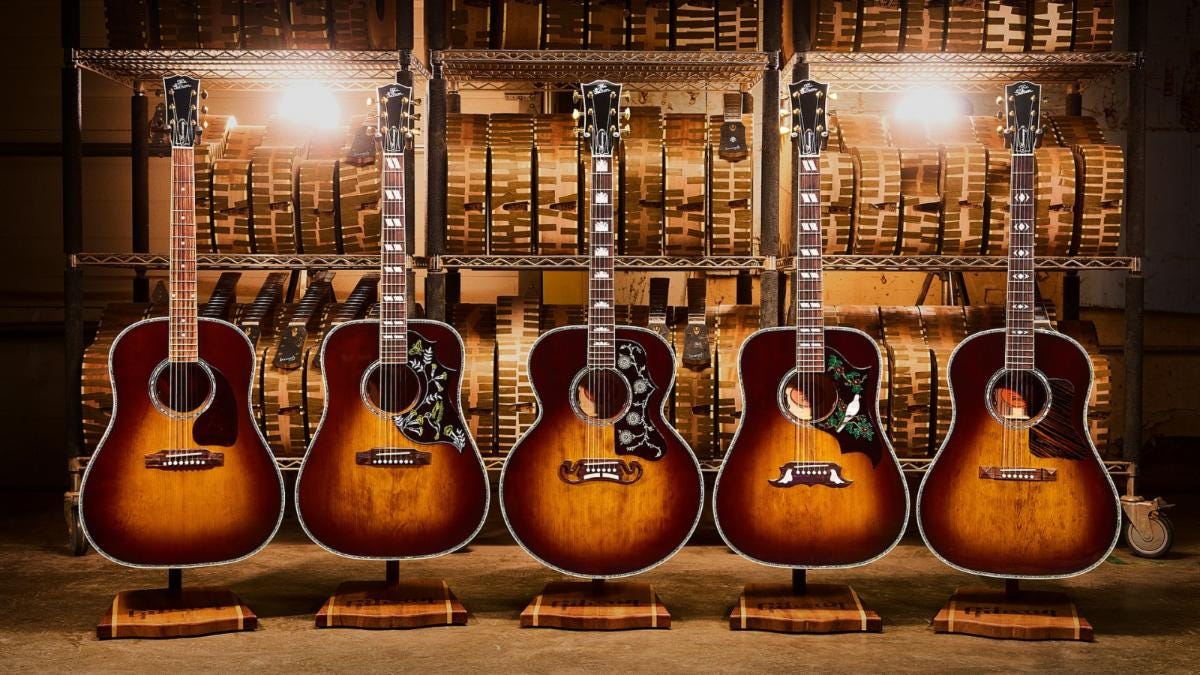
The story of unplugged music has always been rooted in something deeper than performance—it is about origin, construction, and the deliberate act of shaping sound by hand. That philosophy is now being elevated on a global stage as Gibson expands its 100-year celebration of flat-top acoustic guitars into a meticulously structured, four-chapter narrative that doesn’t just commemorate history—it dissects, refines, and projects it forward. For Unplugged Live, this is not simply an anniversary cycle. It is a definitive blueprint for how acoustic music continues to evolve at the highest level.

What makes this initiative particularly significant is its depth. Rather than a single commemorative release or a limited-edition drop, Gibson has constructed a year-long progression—an editorial and technical journey that moves from legacy into innovation with precision. Anchored in the company’s Bozeman, Montana craftory, where each instrument is still shaped, voiced, and assembled through hands-on expertise, the series positions acoustic craftsmanship as both heritage and forward-thinking discipline.

The opening phase, “A Century in the Making,” sets the foundation with clarity and intent. This first chapter is not a nostalgic look backward—it is a strategic framing of how Gibson flat-top acoustics became the universal language of songwriting across genres. Blues, country, folk, Americana, and rock all converge within this narrative, unified by the acoustic guitar as the central instrument of expression. At the core of this chapter is the introduction of the Century Collection, a refined series of 12-fret acoustic designs that draw directly from early 20th-century construction principles. These instruments are not retro reproductions; they are modern interpretations of minimalism, engineered to emphasize tonal balance, responsiveness, and intimacy—qualities that define the unplugged experience at its highest level.

As the timeline advances into the second chapter, “Iconic Body Shapes,” the focus sharpens on design as both function and identity. Models like the J-45 and L-00 are examined not just as instruments, but as archetypes that shaped the visual and sonic language of acoustic performance. These silhouettes became instantly recognizable not because of branding, but because of their consistency on stage, in studios, and across decades of recorded music. Their tonal characteristics—warmth, projection, articulation—were not static; they evolved alongside the demands of artists who required versatility in increasingly diverse performance environments. This chapter reframes these guitars as living designs, continuously refined to meet the changing realities of music production and live presentation.

The third phase, “A Unique Recipe,” moves beyond aesthetics and into the engineering philosophy that defines the Gibson acoustic sound. This is where the narrative becomes technical, revealing the structural DNA that differentiates these instruments from anything else in the market. Traditional dovetail neck joints, radiused tops, and carefully calibrated bracing patterns are not presented as legacy features—they are treated as essential components of tonal integrity. Each detail contributes to projection, sustain, and playability, forming a cohesive system that translates physical vibration into a distinct sonic signature. At the same time, this chapter acknowledges the role of modern innovation, particularly in pickup technology, which allows these acoustics to retain their character when amplified on contemporary stages. The balance between tradition and technology is not incidental—it is engineered.

The final chapter, “The Next 100 Years,” shifts the conversation from preservation to progression. Centered once again in Bozeman, this phase explores how player-focused design and technological refinement are shaping the future of acoustic performance. It examines how ergonomics, durability, and tonal consistency are being reimagined to meet the needs of modern artists who move fluidly between studio, stage, and digital platforms. This is where the centennial narrative becomes forward-looking, positioning Gibson not just as a steward of history, but as an active participant in defining what acoustic music will sound like in the decades ahead.

What ties these chapters together is a singular concept: the acoustic guitar as a living instrument. Not in the metaphorical sense, but in the practical reality that each design decision, each material choice, and each construction method contributes to an evolving standard. The Gibson flat-top is not fixed—it adapts, responds, and grows alongside the artists who rely on it.

The introduction of the Century Collection reinforces this philosophy with precision. Among its standout entries, the J-45 12-Fret configuration represents a subtle yet significant shift in design approach. By moving the neck joint and altering string tension dynamics, the instrument delivers a different tonal response—one that emphasizes warmth and resonance while maintaining clarity. It is a design that speaks directly to the needs of unplugged performance, where nuance and detail are not just appreciated but required.

Beyond the instruments themselves, the broader ecosystem surrounding this celebration reflects Gibson’s integrated approach to modern music culture. Through platforms like Gibson TV and physical destinations such as the Gibson Garage locations in Nashville and London, the company is creating environments where the acoustic tradition can be experienced, explored, and extended. These are not static showcases—they are active hubs for engagement, connecting players, listeners, and creators in real time.

For Unplugged Live, the implications of this four-chapter rollout are substantial. It underscores a broader shift within the music industry, where stripped-down performance is not a niche format but a central pillar of artistic expression. As audiences continue to seek authenticity and immediacy, the demand for instruments that can deliver both without compromise is only increasing. Gibson’s centennial initiative meets that demand with a level of depth and clarity that sets a new standard for how legacy brands engage with contemporary culture.

This is ultimately what makes the 100 Years of Gibson Flat-Tops celebration so impactful. It is not content—it is context. It provides a framework for understanding how acoustic music has evolved, why it continues to matter, and where it is headed next. Each chapter builds on the last, creating a comprehensive narrative that is as much about the future as it is about the past.

A century into its journey, the Gibson flat-top acoustic remains exactly what it has always been: an instrument of connection. Between artist and audience. Between tradition and innovation. Between the sound that was and the sound that is still being discovered.

0050c5ba-8a84-44e2-9e4e-bf317b065a67

A Century in the Making: Gibson’s 100-Year Acoustic Legacy Redefines the Sound of Unplugged Music

There are few constants in the evolution of live music, but one remains undeniable: when everything is stripped away, it is the acoustic guitar that carries the weight of the moment. That truth sits at the heart of a landmark celebration now unfolding across the global music landscape, as Gibson marks a full century of flat-top acoustic innovation with a sweeping, year-long tribute that doesn’t just look back—it reasserts the foundation of what unplugged performance truly means.

This milestone, officially unveiled from Nashville, signals far more than an anniversary. It is a definitive acknowledgment that the sound of modern music—across genres, generations, and geographies—has been shaped, defined, and continuously reimagined through the unmistakable voice of Gibson flat-top acoustics. From front porch songwriting sessions to arena-filling performances, these instruments have not simply accompanied artists; they have enabled entire movements.

The 100 Years of Gibson Flat-Tops initiative unfolds as a multi-chapter narrative, structured to trace the lineage of acoustic craftsmanship while spotlighting the players, builders, and cultural moments that transformed wood and wire into something enduring. At its core is a philosophy that resonates deeply with the ethos of Unplugged Live: authenticity is not a trend, it is the standard. And for a century, Gibson’s flat-top guitars have been the instruments through which that standard is realized.

The origins of this legacy trace back to a pivotal moment in 1926, when Gibson introduced its first flat-top model, a design evolution that would quietly ignite a seismic shift in music history. What began as a structural adaptation—repurposing an archtop body concept into a flat-top format—became the blueprint for entirely new sonic territories. Blues found a new voice. Country music gained its backbone. Folk, bluegrass, and Americana emerged not just as genres, but as cultural identities rooted in acoustic expression.

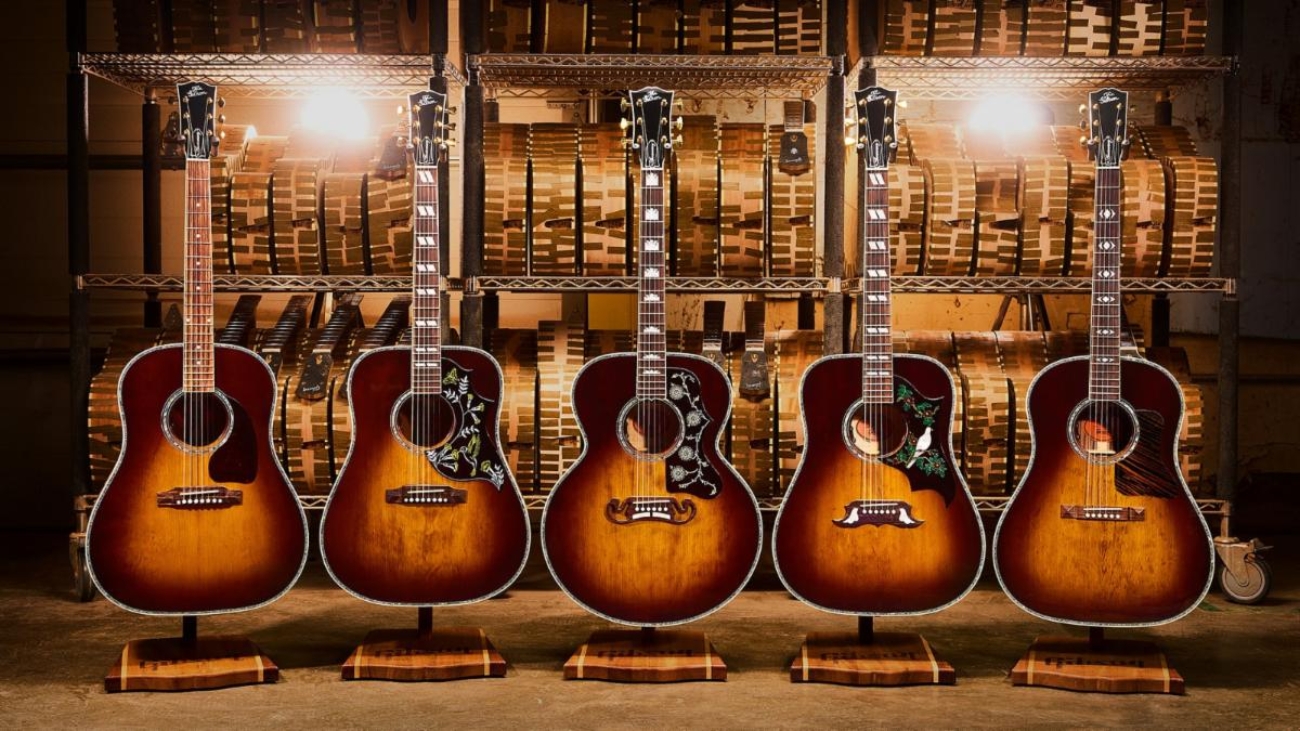
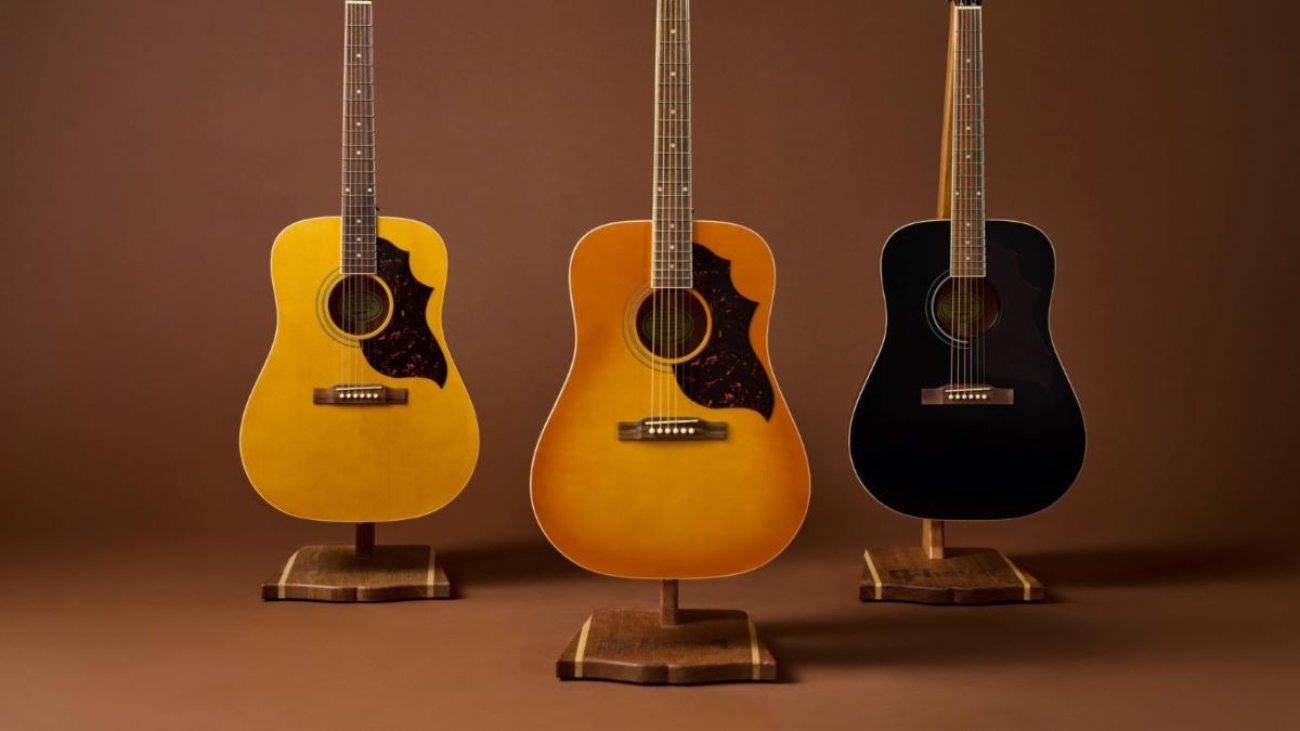
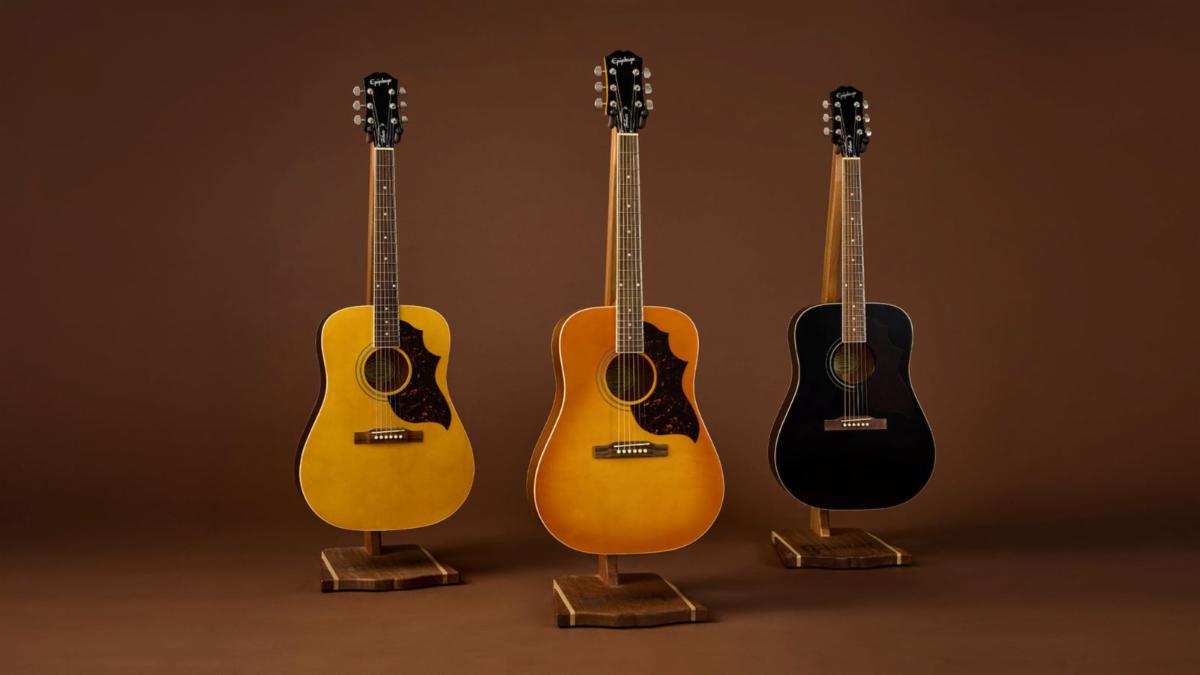
Today, those foundational innovations live on through an iconic lineup that remains instantly recognizable to musicians and audiences alike. Instruments such as the J-45™, L-00, SJ-200™, Hummingbird™, Southern Jumbo, and Dove™ are not merely products; they are reference points in the timeline of recorded and live music. Each model carries its own tonal signature, its own history of recordings and performances, and its own role in shaping the sound of generations.

What elevates this centennial beyond a retrospective is the living, breathing craftsmanship behind it. For over four decades, Gibson’s acoustic division has been anchored in Bozeman, where a dedicated team of luthiers continues to build each instrument with a blend of traditional technique and modern precision. Under expansive Montana skies, these guitars are not mass-produced commodities—they are individually realized instruments designed to resonate across lifetimes. The continuity between past and present is deliberate, ensuring that every new guitar feels connected to the lineage that precedes it.

This emotional continuity is central to why Gibson flat-tops remain so deeply embedded in the DNA of unplugged performance. For many, the connection begins long before the first chord is played. It starts with discovery—a guitar found in a family home, a sound heard through a vintage recording, a moment on television that sparks curiosity. These instruments carry memory, and in doing so, they create it. They are as much about storytelling as they are about sound.

The centennial celebration brings that storytelling into focus through a series of curated releases and experiences. A new wave of instruments, introduced as part of the Century Collection, represents both homage and forward momentum. First previewed at the NAMM Show, these guitars are designed to reflect the evolution of acoustic performance while maintaining the tonal integrity that defines the Gibson identity. They are not reinventions—they are refinements, built for a new generation of artists who will carry the acoustic tradition forward.

Complementing these releases is a multimedia rollout that deepens the narrative. Through Gibson TV, the first installment of the centennial series brings together artists and voices that embody the spirit of the acoustic tradition. Narrated by Emmylou Harris, the series bridges eras and genres, connecting the pioneers who defined the sound with the emerging talents who are reshaping it. Appearances from artists like Brett Tomberlin and Syd Taylor reinforce the continuity of influence, demonstrating that the acoustic guitar remains a central force in contemporary songwriting and performance.

For the Unplugged Live audience, this moment lands with particular significance. The resurgence of interest in acoustic performance—across streaming platforms, live sessions, and intimate venue experiences—mirrors the very principles that Gibson has championed for a century. In an era defined by digital production and sonic layering, the stripped-down format continues to offer something irreplaceable: clarity, immediacy, and connection.

That is the enduring power of the flat-top acoustic guitar. It does not rely on amplification to command attention. It does not require spectacle to create impact. It exists in the space between artist and listener, translating emotion into sound with a directness that remains unmatched.

As this centennial unfolds, it does more than celebrate the past—it establishes a framework for the future of unplugged music. The next generation of artists will inherit not just instruments, but a philosophy: that the most powerful performances are often the simplest, and that within that simplicity lies infinite possibility.

One hundred years in, Gibson’s flat-top legacy stands not as a closed chapter, but as an open invitation. The instruments are ready. The stage—whether it’s a front porch, a studio, or a global platform—is waiting. And the next century of unplugged music is already beginning to take shape.

Screenshot 2026-04-27 124531

MTV Unplugged Returns in Full, Paramount+ Unlocks the Definitive Acoustic Archive That Redefined Live Music – Listen on Unplugged Live

There are moments in music history when the noise falls away and what remains is something far more powerful than volume or spectacle. The recent expansion of the MTV Unplugged catalog on Paramount+ is not simply a content update—it is a restoration of one of the most culturally significant live performance archives ever assembled. With more than 100 episodes now available, spanning the show’s most influential years, this release reintroduces a generation-defining format that transformed how audiences experience artists at their most exposed, most human, and most creatively unfiltered.

Originally launched under the MTV Unplugged banner, the series became a proving ground where musicians stripped away production layers and leaned entirely on musicianship, arrangement, and emotional delivery. The newly expanded library focuses heavily on what had long been considered “lost” or inaccessible performances—episodes from the 1990s that had quietly slipped out of circulation for decades. Now, for the first time in over 20 years, these sessions return in a cohesive, curated form that underscores just how essential Unplugged remains to the evolution of live music.

At the center of this revival are landmark performances that didn’t just define the series—they reshaped entire careers. The 1993 session from Nirvana stands as perhaps the most iconic entry in the archive. Recorded just months before the death of Kurt Cobain, the performance diverged sharply from expectations. Instead of leaning on mainstream hits, the setlist drew from deep cuts and covers, creating an atmosphere that felt less like a television taping and more like an intimate wake. Its rawness, vulnerability, and haunting tone elevated it into something closer to a historical document than a concert.

Equally transformative is the 1992 session from Eric Clapton, now presented in an enhanced edition that revisits the performance with remastered visuals and previously unreleased material. Clapton’s acoustic reinvention of his own catalog—particularly the reimagining of “Layla”—shifted the industry’s understanding of how legacy artists could reinterpret their work. The expanded release deepens that narrative, offering a more complete look at the creative recalibration that defined that era of his career.

The inclusion of Mariah Carey’s 1992 appearance captures a different kind of breakthrough. Known for vocal precision and studio polish, Carey used the Unplugged stage to dismantle any lingering doubts about her live capabilities. Her rendition of “I’ll Be There” didn’t just resonate—it became a cultural moment that reinforced her position as one of the defining voices of her generation. Similarly, the 1996 session from Oasis remains one of the most talked-about performances in the show’s history, not for its polish but for its unpredictability. With Liam Gallagher notably absent from the stage and observing from the audience, Noel Gallagher carried the performance alone, creating a tension that has since become part of the band’s mythology.

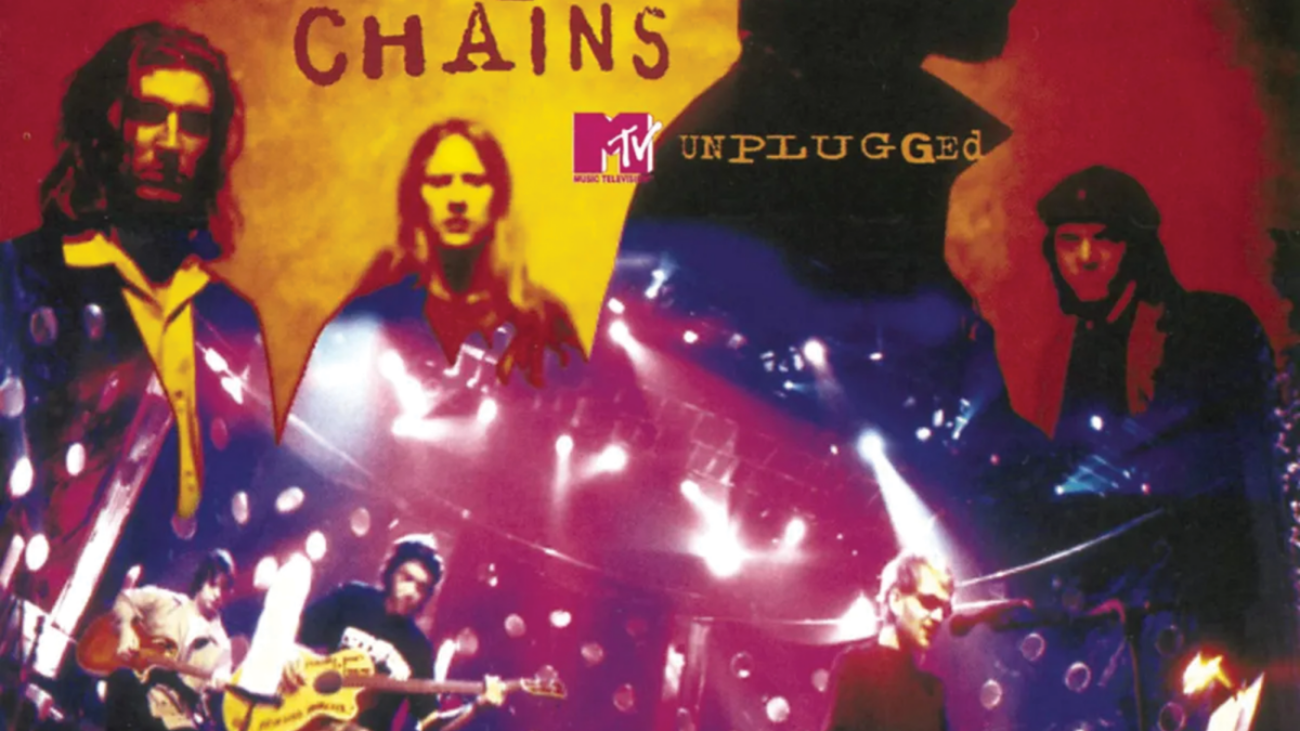
What elevates this expansion beyond nostalgia is its breadth. The restored catalog spans Seasons 1 through 8 and picks up again from Seasons 10 through 13, effectively reconstructing the most influential era of the series. Within that framework lies a cross-section of genres that reflects the diversity of the 1990s music landscape. The alternative and grunge movement is represented through pivotal sessions from Pearl Jam and Alice in Chains, each translating the intensity of their amplified sound into stripped-down arrangements that revealed new emotional dimensions. Meanwhile, Alanis Morissette’s appearance captures the introspective edge of late-90s alternative pop, emphasizing lyrical clarity over production density.

The archive also reaches back to foundational performances that helped establish the Unplugged identity. Early sessions from Paul McCartney, Bob Dylan, and Elton John demonstrate how veteran artists embraced the format as an opportunity to reconnect with the core of their songwriting. These are not novelty performances—they are recalibrations, moments where decades of musical evolution are distilled into something immediate and tangible. Appearances from Tony Bennett and Shakira further expand the scope, bridging generations and styles in a way that feels remarkably cohesive.

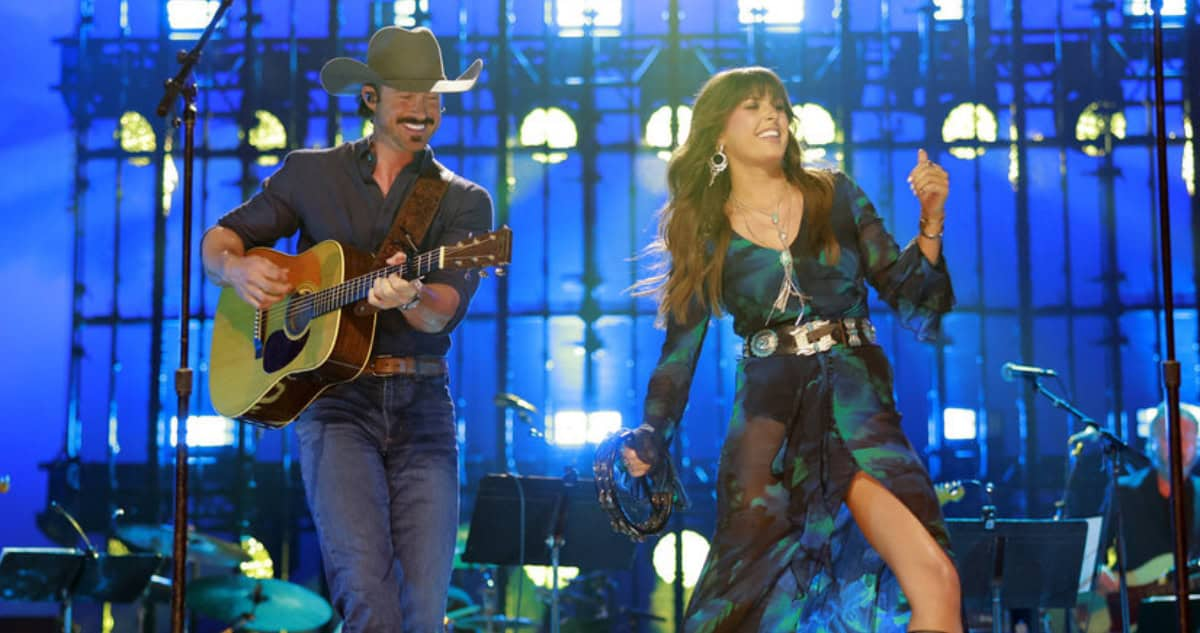
Beyond Unplugged, the expansion strategically integrates two complementary franchises that extend the same philosophy of intimacy and storytelling. The addition of VH1 Storytellers introduces performances where narrative takes center stage, with artists like Bruce Springsteen and David Bowie unpacking the origins and meanings behind their work in real time. These sessions function as both performance and documentation, offering insight into the creative process that traditional concerts rarely provide. Meanwhile, CMT Crossroads pushes the format into collaborative territory, pairing artists across genres in ways that challenge conventional boundaries. The interplay between Sheryl Crow and Willie Nelson, or Stevie Nicks alongside Lady A, exemplifies how stripped-down arrangements can serve as a bridge between musical worlds.

What emerges from this comprehensive rollout is a redefinition of what a live performance archive can be in the streaming era. Rather than presenting isolated highlights, Paramount+ has effectively reconstructed an ecosystem—a living catalog where the evolution of modern music can be traced through acoustic reinterpretation. This is not passive viewing; it is an immersive experience that invites audiences to engage with performances as artifacts of artistic intent.

For Unplugged Live, the implications are immediate and profound. This resurgence reinforces the enduring value of stripped-down performance as both an artistic discipline and a listener experience. In an industry increasingly driven by production scale and digital enhancement, the renewed accessibility of these sessions serves as a counterbalance, reminding audiences and artists alike that authenticity, arrangement, and presence remain the foundation of compelling live music.

As the archive continues to expand, it positions MTV Unplugged not as a relic of a previous era, but as an active reference point for the future of live performance. The format’s influence is visible across contemporary acoustic sessions, livestream performances, and intimate studio recordings that prioritize connection over spectacle. With this release, Paramount+ has not only preserved that legacy—it has amplified it, ensuring that the defining sound of unplugged music remains as vital and resonant as ever.

1400x500-1

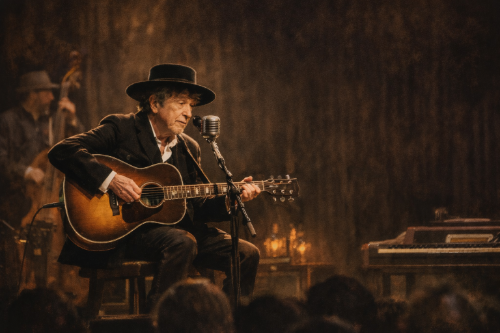
Bob Dylan Unplugged in Motion: The Rough and Rowdy Ways Tour Reinvents Itself as a Stripped-Down Live Statement for 2026

There are moments in live music when an artist does not simply revisit a catalog, but redefines how that catalog is experienced in real time. With the launch of the 2026 leg of the Rough and Rowdy Ways tour, Bob Dylan has delivered precisely that kind of moment—one that has immediately positioned this latest run as one of the most compelling and creatively significant evolutions of his modern touring era. For Unplugged Live, this is not just another tour update. It is a definitive shift toward a more intimate, acoustic-forward performance model that aligns perfectly with the essence of what live music can be when it is stripped back to its core.

Opening night on March 21, 2026, at the Orpheum Theater in Omaha did not arrive quietly. It arrived with intention, signaling a deliberate departure from the structure and sound that had defined the tour since its inception in 2021. The most immediate and visible change was Dylan’s move away from the grand piano that had anchored previous performances. In its place, a smaller keyboard introduced a different physical and sonic presence—less dominant, more integrated, and more conducive to the kind of subtle interplay that would define the night.

That shift was mirrored and amplified by the configuration of the band. Longtime collaborators Bob Britt and Doug Lancio, along with the rest of the ensemble, transitioned entirely to acoustic instrumentation. This was not a cosmetic adjustment. It fundamentally altered the architecture of the performance. Electric textures and layered amplification gave way to clarity, space, and nuance. The result was a sound that felt immediate and unfiltered, where each note carried weight and where silence itself became an active component of the arrangement.

What emerged from that configuration was a performance that can best be understood as a radical pivot—not in the sense of abandoning the tour’s identity, but in refining it. The Rough and Rowdy Ways material, which had previously been presented with a broader, more expansive sonic palette, was reinterpreted through this acoustic lens. Songs that had been defined by atmosphere and density were now framed by restraint and precision, revealing new dimensions within familiar compositions.

The setlist itself reinforced this sense of reinvention. Dylan reduced the number of selections from Rough and Rowdy Ways, creating space for material that had not been heard in years. The reintroduction of “Man in the Long Black Coat,” absent from live performance since 2013, served as both a nod to deep catalog devotees and a demonstration of how older material can be revitalized within a new sonic framework. Similarly, “All Along the Watchtower” appeared not as a predictable inclusion, but as a recontextualized piece, shaped by the acoustic environment and the evolving dynamics of the band.

Perhaps the most unexpected moment of the night came at its conclusion, when Dylan delivered the first live performance of Eddie Cochran’s “Nervous Breakdown.” This choice underscored a recurring theme in Dylan’s live work: the willingness to blur the boundaries between his own material and the broader musical lineage that has influenced him. It was a reminder that his performances are not static recitations, but living conversations with the history of American music.

For Unplugged Live, the significance of this opening night extends far beyond a single performance. It represents a broader recalibration of what audiences can expect from the remainder of the tour. The stripped-down approach is not a one-off experiment—it is the new foundation. As the tour has moved through the South, with recent and upcoming stops in cities such as Spartanburg, Macon, and Jackson, the acoustic framework has continued to evolve, adapting to different venues and audiences while maintaining its core identity.

Looking ahead, the expansion of the tour through the summer months signals both confidence and ambition. A newly added series of dates stretching through July will bring this reimagined performance to major markets including Austin, Chicago, and Philadelphia, each offering its own context and scale. The inclusion of special guests such as Lucinda Williams and Brittney Spencer on select dates adds another layer of depth, introducing complementary voices that align with the tour’s emphasis on authenticity and musical storytelling.

What makes this phase of the Rough and Rowdy Ways tour particularly compelling is the way it aligns with the broader ethos of unplugged performance. In an era where live shows are often defined by scale, production, and spectacle, Dylan’s approach moves in the opposite direction. It prioritizes intimacy over volume, detail over density, and interpretation over replication. It invites the audience to listen differently—to engage with the music not as a familiar product, but as an evolving form.

This is where Unplugged Live finds its strongest resonance. The platform has long been built around the idea that live music, at its most powerful, is about connection rather than amplification. Dylan’s current tour embodies that principle at the highest level, demonstrating how an artist with decades of material can continue to find new ways to present, reinterpret, and challenge that material without losing its essence.

There is also a broader narrative at play—one that speaks to longevity and reinvention. Dylan’s willingness to restructure his performance model after four years on the same tour reflects a refusal to settle into routine. It is an acknowledgment that even established frameworks must be reexamined, that evolution is not optional but necessary. This mindset has defined his career from the beginning, and it continues to shape his work in ways that keep it relevant and unpredictable.

For audiences, this creates a different kind of anticipation. The question is no longer simply what songs will be played, but how they will be played. Each performance becomes a unique event, shaped by the interplay between musicians, the acoustics of the venue, and the subtle decisions made in real time. It is a return to the idea of the concert as an experience that cannot be fully captured or replicated.

As the 2026 leg of the Rough and Rowdy Ways tour continues to unfold, it is clear that this acoustic transformation is not a detour—it is a destination. It reflects a deeper understanding of what live music can achieve when it is stripped back to its essentials, when it is allowed to breathe, and when it is guided by an artist who remains committed to exploration.

Unplugged Live will continue to follow this evolution closely, not simply as coverage, but as recognition of a moment that stands out within the current live music landscape. Dylan’s latest iteration of the tour is not just a continuation of what came before. It is a redefinition—one that reinforces the enduring power of live performance when it is approached with intention, restraint, and a willingness to change.

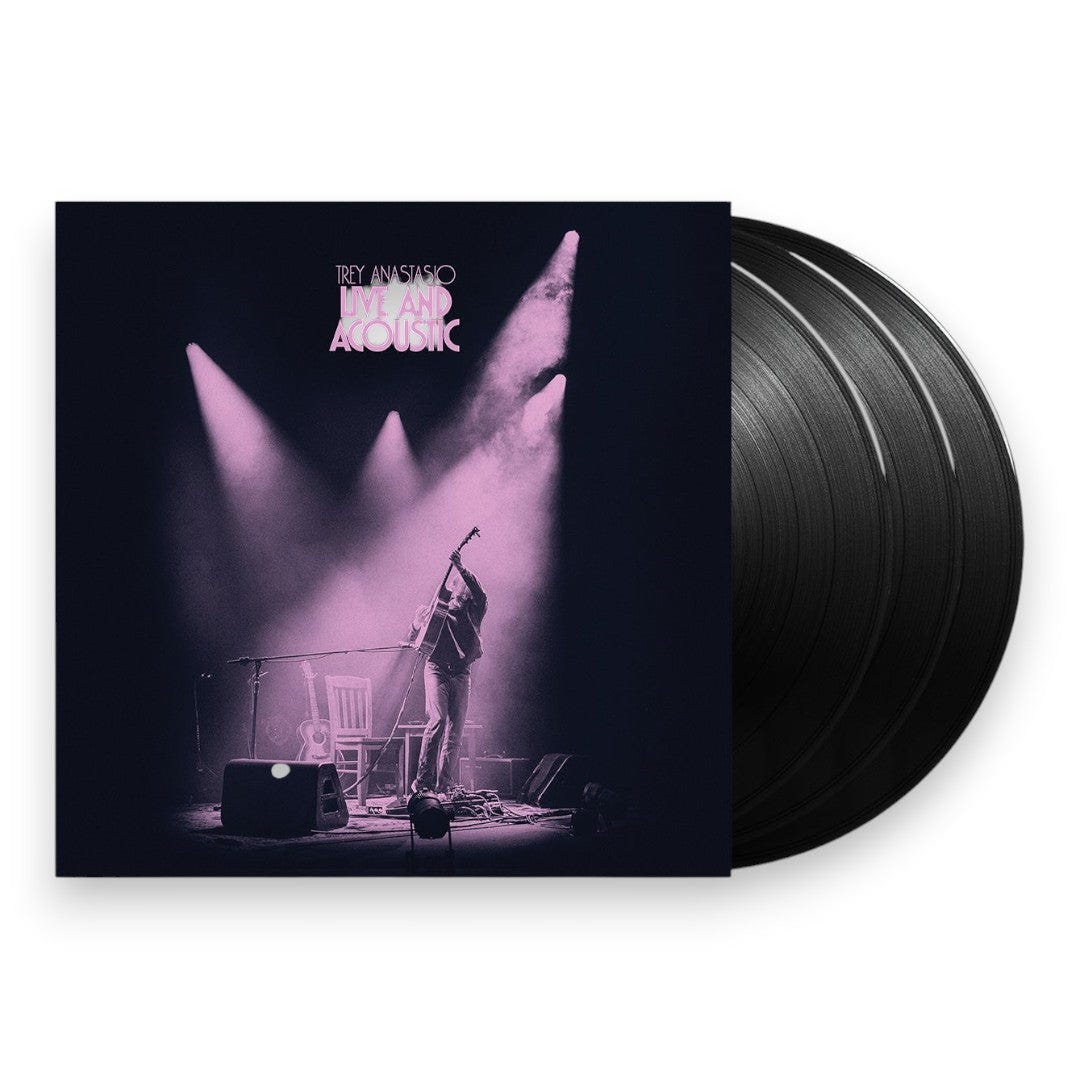
TreyLiveAcoustic_CV1500-768x768

Trey Anastasio’s Live and Acoustic Rewrites the Songbook in Real Time and the 2026 Tour Should Put That Evolution on Full Display

Trey Anastasio has spent decades building one of the most expansive and improvisationally driven catalogs in modern American music, yet Live and Acoustic arrives as a deliberate narrowing of that scope. It is not a retreat from scale so much as a disciplined examination of what remains when scale is removed. Recorded during his sold-out 2025 Spring Acoustic Tour and released a few weeks ago on Rubber Jungle Records, the album has already begun to find its way into rotation. It stands as a focused reworking of material that was never originally designed to exist in isolation. The result is not simply a quieter version of the same music, but a materially different interpretation.

What distinguishes this release is the degree to which the arrangements have been restructured rather than reduced. These performances do not rely on the improvisational elasticity that has long defined Anastasio’s live identity. Instead, they operate within fixed boundaries, forcing the compositions to resolve through structure rather than expansion. That shift exposes elements of the songwriting that are often secondary in full-band performances, including harmonic progression, melodic contour, and the pacing of lyrical delivery.

“Divided Sky” provides a clear example of this transformation. In its traditional form, the piece is built around contrast and scale, with composed passages giving way to extended improvisation. In this acoustic context, the absence of that expansion places the entire burden on the composition itself. The transitions become more precise, the phrasing more deliberate, and the emotional arc more contained. It becomes a study in how the piece functions at its core, rather than how far it can be extended.

“Stash” undergoes a similar recalibration. Known for its rhythmic complexity and its capacity for improvisational departure, it is presented here with a level of control that highlights its internal structure. The rhythmic tension remains, but it is expressed through phrasing rather than propulsion. The result is a version that emphasizes design over movement.

The most effective moments on Live and Acoustic emerge from the material that already leans toward emotional directness. “Waste,” “Miss You,” and “Lifeboy” are not transformed so much as clarified. Without the presence of a full ensemble, the performances rely entirely on vocal delivery and subtle instrumental support. There is no room for excess, and that limitation works in the songs’ favor. The emotional intent is carried without amplification, which ultimately makes it more convincing.

Other selections benefit from the increased visibility of their internal mechanics. “Pebbles and Marbles” reveals a level of compositional detail that is often diffused in larger arrangements. “Brian and Robert” and “Strange Design” are presented with a restraint that reinforces their narrative focus. “Secret Smile” and “Dirt” operate with a similar sense of balance, where the simplicity of the arrangement allows the songwriting to remain the primary point of engagement.

The inclusion of more recent material such as “Evolve,” “Oblivion,” and “A Little More Time” is not incidental. These songs integrate into the setlist without disruption, which suggests a continuity in Anastasio’s writing that extends beyond era or context. The implication is that the newer compositions are structurally aligned with the older material, capable of functioning within both expansive and minimal frameworks.

Live and Acoustic Tracklist:

  1. More
  2. A Little More Time
  3. Evolve
  4. Lost in the Pack
  5. Oblivion
  6. Stash
  7. Brian and Robert
  8. Hey Stranger
  9. Waste
  10. Snowflakes in the Sand
  11. Taste
  12. Miss You
  13. Billy Breathes
  14. Shade
  15. Petrichor
  16. Dirt
  17. Lifeboy
  18. Secret Smile
  19. Pebbles and Marbles
  20. Strange Design
  21. Divided Sky
  22. Mercy

Jeff Tanski’s role throughout the album is measured and essential. His piano work does not compete for attention but instead reinforces the harmonic direction of each piece. In many cases, he functions as a counterbalance, adding depth without altering the fundamental character of the performance. This restraint is central to the album’s effectiveness. The arrangements remain focused, and the interplay between guitar and piano is defined by precision rather than embellishment.

Producer Vance Powell approaches the recordings with a similar philosophy. The emphasis is on capturing the natural acoustic environment rather than reshaping it in post-production. The sound is defined by clarity and spatial integrity, allowing the listener to experience the performances as they occurred. This approach aligns with the broader intent of the project, which is to present the material without unnecessary intervention.

The significance of Live and Acoustic lies in what it reveals about the durability of Anastasio’s catalog. These songs are not dependent on scale, volume, or extended improvisation to maintain their impact. They function independently, supported by structure and intent. That is not a minor distinction. It positions the work as adaptable rather than fixed, capable of evolving without losing its identity.

This approach will carry directly into the 2026 acoustic tour, which extends the concept beyond the recording environment and into a live setting that prioritizes listening over spectacle. The routing reflects a deliberate emphasis on venues known for their acoustic integrity and audience engagement. The tour opens in Portland, Oregon and continues to Seattle’s Paramount Theatre before reaching Missoula, Montana for two nights at The Wilma. From there, it moves through Jackson, Wyoming and the Gerald R. Ford Amphitheater in Vail, Colorado, followed by performances in Minneapolis and Bayfield, Wisconsin.

The latter stop, at Big Top Chautauqua, introduces a distinct environmental element, with its proximity to Lake Superior contributing to the overall atmosphere of the performance. The tour then proceeds to Toronto’s Massey Hall, a venue with a long-standing reputation for hosting artists in settings that emphasize clarity and presence. It concludes with two nights at The Capitol Theatre in Port Chester, New York, a location closely associated with Anastasio’s extended live history and one that provides a fitting endpoint for a tour built on reflection and precision.

The structure of this run suggests that the performances will not be interchangeable. These are rooms that demand attention to detail, both from the artist and the audience. The expectation is not volume or scale, but engagement. That distinction matters. It shifts the focus from performance as event to performance as communication.

Tickets for the tour will be available through a real-time presale beginning Tuesday, March 17 at 10AM local venue time via official presale access, with general on-sale starting Friday, March 20 at 10AM local time. Based on the response to the 2025 acoustic tour, demand is expected to be immediate and sustained, particularly in markets where venue capacity is intentionally limited.

Ultimately, Live and Acoustic does not attempt to redefine Trey Anastasio as an artist. It refines the framework through which his work is understood. By removing the variables that have traditionally defined his live performances, the album forces a closer examination of the material itself. What it reveals is a catalog that is structurally sound, emotionally direct, and capable of sustaining attention without reliance on expansion.

The 2026 tour will extend that examination into a live context, where the same principles will be tested in real time. If the album is an argument for the strength of the songwriting, the tour will serve as its verification.

ACOUSTIC TOUR 2026
May 26 Portland, OR
May 27 Seattle, WA
May 29 Missoula, MT
May 30 Missoula MT
May 31 Jackson, WY
June 3 Vail, CO
June 13 Minneapolis, MN
June 14 Bayfield, WI
June 19 Toronto, ON
June 20 Buffalo, NY
June 23 Port Chester, NY
June 24 Port Chester, NY 

AP26087734033916

Bruce Springsteen’s Acoustic Performances Highlight Current Global Live Music Landscape with Live Acoustic Performances Across Global Tours, Venues and on Unplugged Live!

Unplugged Live: April 2026

As of April 6, 2026, the live music landscape is experiencing a clear and measurable shift back toward stripped-down performance, where arrangement, songwriting, and vocal delivery take precedence over production scale. Across theaters, churches, listening rooms, and curated performance spaces, acoustic and “unplugged-style” shows are not functioning as side projects or nostalgic throwbacks—they are emerging as a central format for artists at every level. From legacy figures reinterpreting their catalogs to modern touring acts reshaping how audiences engage with live music, the current cycle reflects a renewed emphasis on clarity, intimacy, and musicianship.

At the forefront of this movement is Robert Plant, whose ongoing tour with Saving Grace continues to redefine what a late-career live presentation can look like. Performing with vocalist Suzi Dian, the project is rooted in acoustic arrangements that draw from folk, Americana, and reinterpretations of traditional material. Tonight’s performance at the Count Basie Center for the Arts in Red Bank, New Jersey, followed by a performance at the Cathedral of St. John the Divine, places this approach in venues that emphasize acoustics, atmosphere, and listener focus. These are not scaled-down versions of arena shows; they are deliberately structured performances designed for environments where nuance matters.

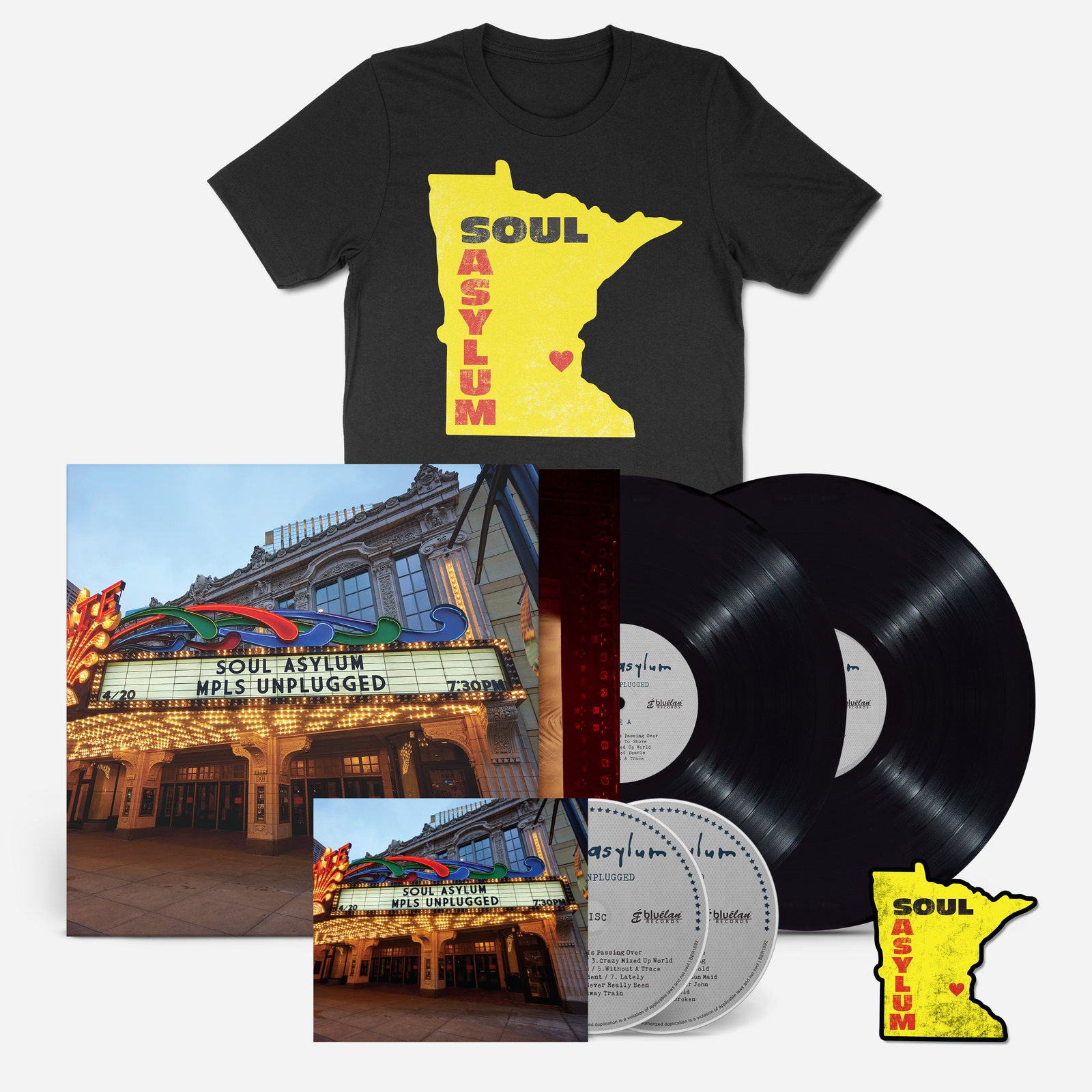
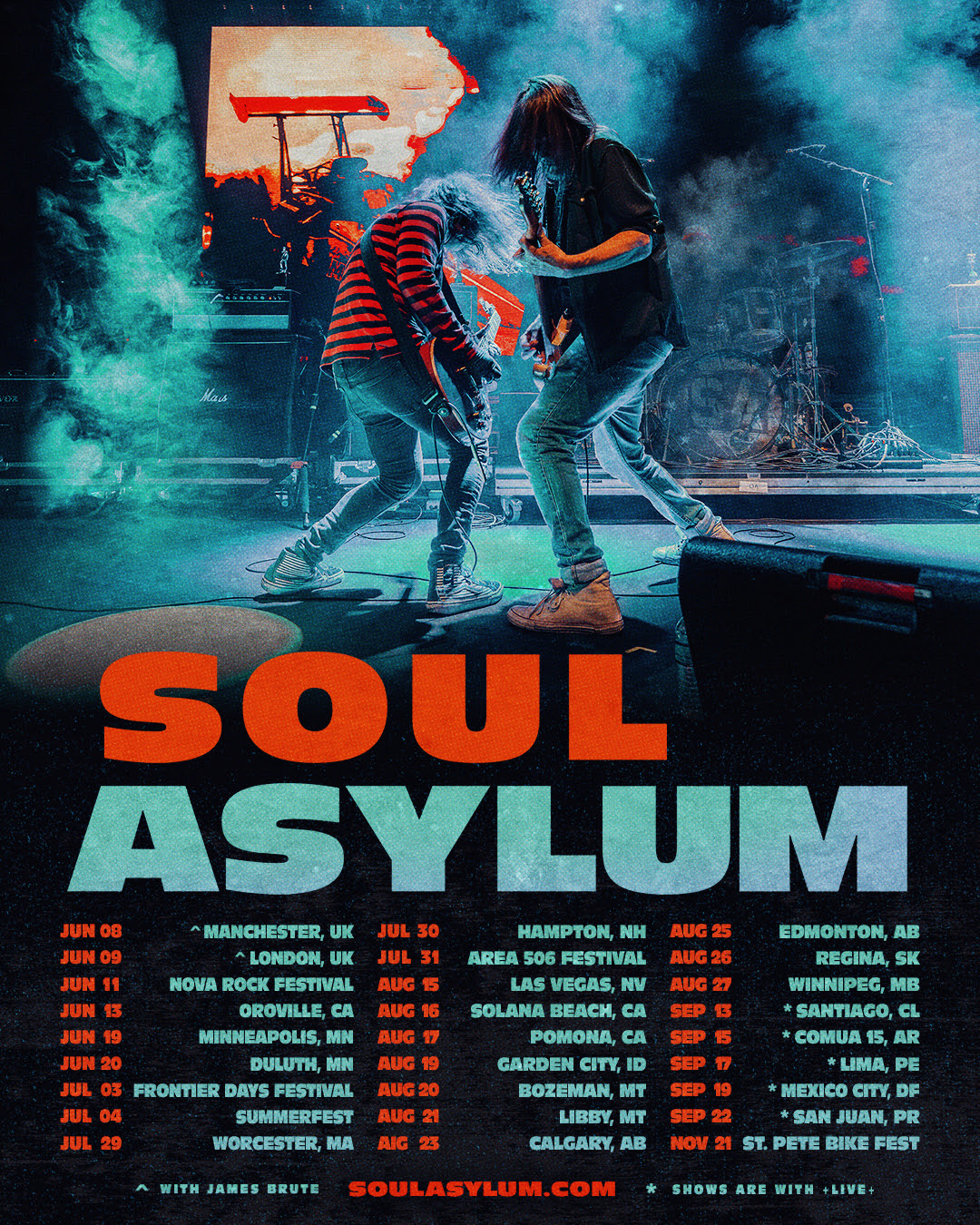
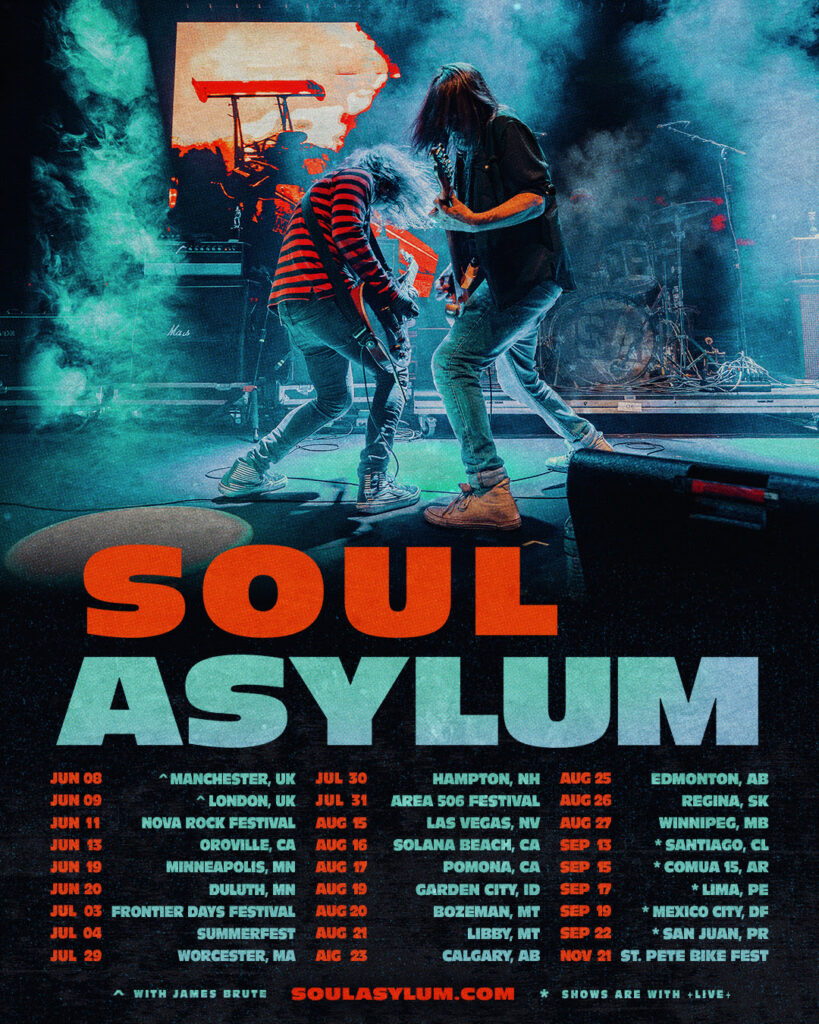
That same philosophy is shaping anniversary-driven touring as well. Soul Asylum has returned to the acoustic format to mark three decades since its original unplugged-era work, delivering a series of performances built around stripped-back arrangements. Their upcoming shows at The Vogel on April 16 and in Saratoga Springs later in the month reflect a broader pattern in which legacy acts are revisiting pivotal moments in their catalog through reinterpretation rather than replication. This is not about recreating the past—it is about reframing it for a different type of listening experience.

The contemporary acoustic circuit is equally active, with Gillian Welch and David Rawlings setting a high standard through their “Acoustic Reckoning” tour. Their recent performances, including extended setlists featuring both new material and deep catalog selections, have been defined by precision, restraint, and an emphasis on live musicianship. In an environment where setlist depth and arrangement detail matter more than spectacle, this tour is functioning as a benchmark for how acoustic performance is evolving in 2026.

Newly announced touring also reflects this direction. Darius Rucker has introduced a 20-date U.S. run built around songwriting and storytelling, with a format that frequently leans into stripped-down arrangements. This type of presentation aligns with the broader shift toward performances that prioritize narrative and connection over production, offering audiences a more direct engagement with the material.

The role of acoustic performance within the global live music landscape continues to be defined not by scale, but by immediacy, clarity, and direct connection between artist and audience. Across major tours, one-off appearances, and politically and culturally significant events, stripped-down performances remain a consistent and powerful format for delivering both new material and reinterpreting existing work. Few recent examples illustrate that more clearly than Bruce Springsteen’s acoustic performances of “Streets of Minneapolis,” a song that has quickly become central to his current live presence.

The most prominent performance to date took place on March 28, 2026, at the Minnesota State Capitol in St. Paul during the “No Kings” rally, where Springsteen appeared alone with an acoustic guitar and harmonica in front of a crowd estimated at over 200,000 people. Introduced by Minnesota Governor Tim Walz, the performance was positioned as a focal moment within a larger national protest event. Before beginning the song, Springsteen addressed the crowd directly, referencing the events that inspired the track and setting the tone for what followed. The performance itself was marked by sustained audience engagement, including a coordinated chant that carried through the grounds as the song progressed. In that setting, the acoustic format was not a stylistic choice—it was a functional one, allowing the message of the song to carry without distraction or production.

The origin of “Streets of Minneapolis” traces back to its initial live debut on January 30, 2026, at the First Avenue club, where Springsteen appeared as an unannounced guest during Tom Morello’s Concert of Solidarity & Resistance to Defend Minnesota. Performed in the same solo acoustic format, the song was introduced only days after it was written, in direct response to the fatal shootings of two city residents. That early performance established the structure and tone that would define subsequent versions—minimal instrumentation, direct vocal delivery, and a focus on lyrical clarity.

In the weeks that followed, the song continued to appear in similar acoustic settings, including a performance at Riverside Church on March 23, where Springsteen again presented the material in its most stripped-down form. That approach has remained consistent even as the song has been incorporated into a broader touring context. When performed with the E Street Band during the current arena run, including the tour kickoff at the Target Center on March 31, the arrangement expands significantly, introducing a full-band dynamic that contrasts sharply with the solo acoustic versions. The distinction between these presentations is not subtle. The acoustic performances are defined by immediacy and directness, while the full-band versions operate within the scale and structure of a traditional arena show.

That contrast has become one of the defining elements of Springsteen’s current live approach. While the tour itself is structured as a full-band production, recent performances have consistently incorporated acoustic moments that shift the tone and pacing of the show. This was evident again during a recent television appearance marking the 30th anniversary of Democracy Now!, where Springsteen joined Patti Smith and Michael Stipe for a stripped-down set built around vocal performance and minimal instrumentation.

The current tour schedule continues to reflect that balance. Springsteen performed in Portland on April 3, with the show drawing attention following a medical emergency in the crowd, and is scheduled to appear at the Kia Forum on April 7. Additional dates bring the tour into the Northeast later this month, including April 20 at the Prudential Center, May 8 in Philadelphia, and multiple nights at Madison Square Garden. Within those performances, the inclusion of acoustic segments continues to serve as a structural counterpoint to the larger production, reinforcing the role of stripped-down arrangements within a broader live framework.

Separate from the touring schedule, developments on April 6 added a more somber note, as Springsteen shared that he is “heartbroken” following the death of a former bandmate. Details surrounding the situation remain limited, but the statement reflects the ongoing personal dimension that continues to intersect with his public work.

Taken together, these performances and appearances provide a clear view of how acoustic presentation functions within the current live environment. It is not defined by venue size or format, but by its ability to deliver material with clarity and directness, whether in front of a crowd of hundreds in a club or hundreds of thousands in a public setting. In Springsteen’s case, the consistency of that approach—from First Avenue to the State Capitol steps to arena stages—demonstrates how acoustic performance remains a central tool for both artistic expression and communication.

Within the broader scope of live music in 2026, this model continues to hold relevance. Acoustic sets are not limited to specific genres or formats; they are integrated into tours, special appearances, and standalone events, offering a different kind of engagement that complements larger productions rather than replacing them. The current cycle reflects that balance clearly, with artists using stripped-down performance as a way to present new material, revisit existing work, and connect with audiences in a more direct way.

As the schedule continues to unfold through the spring and into the summer, that role is unlikely to change. Acoustic performance remains a constant presence across the global touring landscape, defined not by trend, but by its continued use as a practical and effective format for live music.

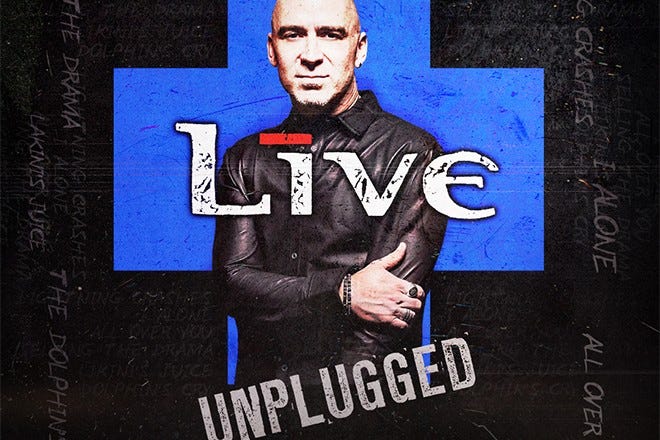
Beyond individual artists, the unplugged format is being expanded through curated experiences and tribute-based productions that reinterpret the concept for new audiences. The ongoing “Unplugged: A Tribute to MTV” tour brings a rotating set of performances across the East Coast, including scheduled stops at The Queen and Jergel’s Rhythm Grille, recreating the stripped-back aesthetic that defined an earlier era while updating it for current touring environments. At the same time, the “90s Unplugged” candlelight concert series introduces a chamber-style interpretation of acoustic music, with string quartet arrangements presented in immersive settings such as the Media Theatre. These formats demonstrate how the unplugged concept continues to evolve, moving beyond a single format into multiple performance models.
At the regional level, the density of acoustic programming across New Jersey and the surrounding area underscores how deeply this format has embedded itself into local touring circuits. In addition to Robert Plant’s Red Bank performance, venues across the region are hosting a range of acoustic events that reflect both stylistic diversity and audience demand. The Atlantic Mandolin Quartet will bring a classical chamber approach to the Zlock Performing Arts Center, while “Harvest & Rust,” a Neil Young-focused acoustic performance, will take place at the Newtown Theatre. Songwriter-driven performances, including an intimate set from Loretta Hagen at the Spanish Pavillion, continue to reinforce the importance of listening-room environments where audience attention is as much a part of the performance as the music itself.

The digital landscape is also contributing to this resurgence. Platforms such as NPR Tiny Desk have become a modern benchmark for stripped-down performance, with recent sessions from artists like Sarah McLachlan, Jill Scott, and Mumford & Sons drawing significant attention. These recordings are not simply promotional content—they are functioning as widely consumed examples of how acoustic performance can be presented in a contemporary context, often reaching audiences that traditional touring alone cannot access.

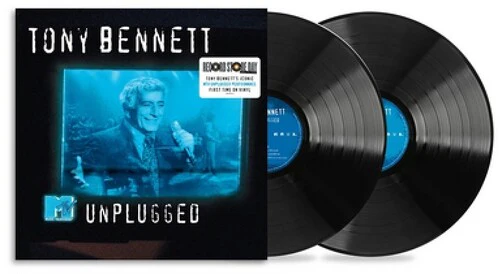
Simultaneously, physical releases are reinforcing the connection between past and present. Soul Asylum’s decision to issue a double-vinyl release of its unplugged-era material for Record Store Day adds another layer to its current tour, linking live performance with collectible formats that continue to hold value for dedicated listeners.

Taken together, the current state of unplugged and acoustic performance in 2026 reflects a broader recalibration within live music. As large-scale productions continue to dominate certain segments of the industry, there is an equally strong movement toward performances that prioritize clarity, space, and direct connection. Artists are not abandoning scale—they are complementing it with formats that allow their material to exist in a different, often more revealing, context.

For audiences, this shift offers something increasingly rare: the opportunity to engage with music without mediation. No elaborate staging, no excessive production layers—just the song, the voice, and the room. And as April unfolds, that approach is not only sustaining itself—it is expanding, redefining what it means to experience live music in its most essential form.

Screenshot 2026-03-26 104751

Singer-Songwriter of Cape May 2026 Returns Unplugged and Unstoppable: Inside New Jersey’s Most Influential Live Music Revival

March 27–28, 2026 marks more than the return of a beloved event—it signals the reawakening of one of New Jersey’s most vital live music ecosystems, where artistry, industry, and authenticity converge in a way few gatherings in the country can replicate. The Singer-Songwriter of Cape May arrives once again with an unmistakable sense of purpose, reestablishing itself as a premier destination for musicians, creators, and fans seeking something real, something intimate, and something built around the enduring power of the song itself.

For nearly a decade leading up to its pause, this event transformed Cape May into a living, breathing network of music. What began in 2008 as a focused singer-songwriter gathering quickly expanded into a full-scale creative summit, activating historic venues, drawing hundreds of performers, and bringing together dozens of industry leaders under one coastal skyline. At its height, the event featured more than 130 artists performing across over 15 venues while upwards of 80 music professionals contributed to panels, mentoring sessions, and artist development opportunities that were as practical as they were inspiring.

That momentum was halted in 2020, leaving behind not just a gap in scheduling but a void in the independent music community. The absence of Singer-Songwriter of Cape May was felt deeply because it had become something rare—a place where emerging voices could meet opportunity without barriers, where seasoned professionals could engage directly with rising talent, and where audiences could experience music in its most stripped-down and emotionally direct form. Its return in 2026 is not simply a continuation; it is a recalibrated, sharpened, and more relevant version of itself.

This year’s edition is anchored once again at Congress Hall’s Grand Ballroom and the Harrison Conference Center, two spaces that have become synonymous with the event’s identity. During the day, these venues will host a dynamic conference program featuring more than 50 industry professionals participating as speakers, mentors, and panelists. These sessions are designed with precision, focusing on real-world application—songwriting craft, touring logistics, branding strategy, publishing frameworks, and the evolving economics of music in a digital-first landscape. This is not passive listening; it is an active exchange of knowledge, where artists gain tools they can immediately apply to their careers.

The evening transforms Cape May into an unplugged circuit of discovery. Beginning after 7:00 PM each night, more than 15 venues—including the Brown Room, The Rusty Nail, The Inn of Cape May, Elaine’s, The Chalfonte, and Fins Bar & Grille—become stages for live performances that emphasize connection over spectacle. These are not distant concerts; they are close-range, immersive experiences where audiences are part of the performance environment, and where the line between artist and listener dissolves into something communal.

The 2026 event is led by two standout headliners who embody the spirit of modern songwriting while carrying deep roots in the craft. Pete Mroz, a Nashville-based artist recognized for his national exposure and emotionally resonant songwriting, takes the stage on Friday night at 7:30 PM in the Congress Hall Ballroom, delivering a performance that blends storytelling with melodic precision. On Saturday, Maya de Vitry—an acclaimed multi-instrumentalist and former member of The Stray Birds—brings her distinctive voice and lyrical depth to the same stage, offering a performance that reflects the evolving landscape of contemporary folk and Americana.

Surrounding these headliners is an expansive showcase lineup featuring artists performing 40-minute sets across the city. Friday night includes Geoff Moran at 7:00 PM, Jo Wymer at 7:45 PM, the Mike Montrey Trio at 8:30 PM, Norm McDonald at 9:15 PM, Dan Strauss at 10:00 PM, Maintenance at 10:45 PM, and Vicki Gagliardi closing out the night at 11:30 PM. Saturday continues with DellaValla Trio at 7:00 PM, Rebecca Lang at 7:45 PM, Steven Lemon at 8:30 PM, The Arcane Insignia at 9:15 PM, Jenna Ivey at 10:00 PM, and Sarah Teti alongside Al Reynolds at 10:45 PM. Additional performers such as Laura McDonald, Caleb Stine, Seth Adam, Brody Bond, Mikki Zip, Jenn DeSantis, and Chip Greene further expand the musical landscape, ensuring that every venue offers a distinct sonic identity. Click here for schedule and more information.

Complementing the live performances is real-time radio integration, with WCFA 101.5 FM broadcasting interviews, performances, and behind-the-scenes conversations throughout the weekend. This element extends the reach of the event beyond physical attendance, capturing the immediacy of the experience while preserving it for a wider audience.

Access to the event is structured to maintain both exclusivity and openness. Two-day conference passes are available at $135, providing full access to panels, workshops, and networking opportunities. Headliner performances are ticketed at accessible price points, with Pete Mroz at $24 and Maya de Vitry at $30. Meanwhile, the majority of showcase performances remain free and open to the public, reinforcing the event’s commitment to accessibility and community engagement.

What distinguishes Singer-Songwriter of Cape May is not just its scale, but its philosophy. It operates on the principle that music, at its core, is about connection—between artist and audience, between creator and craft, and between individuals who share a belief in the power of storytelling through sound. In an industry often dominated by production and spectacle, this event strips everything back to the essentials, creating an environment where authenticity is not just encouraged but required.

The return of this event also reflects a broader resurgence across New Jersey’s live music landscape, where independent venues, artist-driven initiatives, and community-focused programming are reclaiming their place at the center of cultural life. Explore New Jersey continues to spotlight this movement through its comprehensive music coverage, documenting the venues, artists, and events that define the state’s evolving sound.

As the weekend unfolds, Cape May will once again become a hub of creative energy, where songs are not just performed but lived, shared, and discovered. The 2026 Singer-Songwriter of Cape May stands as both a return and a reinvention—a reminder that even in a rapidly changing industry, there is still immense power in a voice, a guitar, and a story worth telling.

Albumism_MTVUnplugged_AlbumMosaic_MainImage

Unplugged, Reimagined, and Reborn: The Acoustic Live Albums That Redefined Music’s Most Intimate Format on Unplugged Live – The Definitive List of Live Acoustic & Unplugged Albums

There are moments in music when amplification fades, spectacle disappears, and what remains is something far more powerful—truth. The rise of unplugged and acoustic live albums didn’t just introduce a format; it reshaped how audiences connect with artists. In an era now dominated by streaming precision and digital perfection, these recordings stand as enduring proof that vulnerability, reinterpretation, and raw musicianship still define greatness.

What began as a stripped-down experiment evolved into a cultural movement—one that continues to influence how artists release music, tour, and engage audiences across platforms. Today, unplugged performances are not nostalgic artifacts—they are essential listening, rediscovered daily by new generations and recontextualized in modern streaming ecosystems.

This is the definitive deep-dive into the albums that built, expanded, and continue to redefine the unplugged experience.


The MTV Unplugged Era: Where Acoustic Became Iconic

The unplugged movement reached global prominence through MTV’s groundbreaking series, transforming living rooms into intimate concert halls and recasting major artists in a completely new light.

At the center of this evolution sits MTV Unplugged in New York by Nirvana—a performance that transcended format and became one of the most emotionally resonant live recordings ever captured. It wasn’t just a concert; it was a redefinition of what grunge could be without distortion.

Equally transformative was Eric Clapton’s MTV Unplugged, a commercial and critical phenomenon that reintroduced blues and acoustic guitar to a global audience, driven by the reimagined “Layla” and the deeply personal “Tears in Heaven.”

Other defining entries elevated the format into a multi-genre showcase of artistry:

  • Alice in Chains delivered a haunting, tension-filled set that remains one of the most powerful acoustic performances in rock history
  • Pearl Jam offered raw intensity in an early-career snapshot
  • Oasis brought Britpop swagger into an acoustic framework
  • R.E.M. translated alternative complexity into stripped-down clarity
  • Mariah Carey showcased vocal precision and control in a minimal setting
  • Lauryn Hill pushed boundaries with MTV Unplugged 2.0, blending spoken word, soul, and raw emotional expression

These performances didn’t simply remove amplification—they exposed artistry in its purest form.


Beyond MTV: The Acoustic Format Expands Its Reach

As the unplugged format gained legitimacy, artists began exploring acoustic live recordings outside the MTV umbrella—often with even greater creative freedom.

Few recordings capture this intimacy better than Live at Sin-é by Jeff Buckley. Recorded in a small New York café, it remains a masterclass in vocal nuance and interpretive performance, blurring the line between rehearsal and revelation.

Similarly, Acoustic Live by Nils Lofgren elevated technical guitar performance into a solo acoustic spectacle, influencing generations of players.

The VH1 Storytellers series also became a critical extension of the format, with artists like Johnny Cash, Bruce Springsteen, and David Bowie blending narrative and performance into deeply personal live recordings.

Elsewhere, artists like Norah Jones and Adele demonstrated that acoustic performance could thrive in both intimate venues and global-scale careers.


Reinvention in Rock and Alternative: Acoustic as a Second Identity

For rock and alternative artists, unplugged performances became an opportunity to re-engineer their catalogs.

Dashboard Confessional built an entire identity around acoustic performance, turning vulnerability into a defining aesthetic. Meanwhile, John Mayer refined the modern acoustic blueprint—balancing technical precision with mainstream accessibility.

Bands like U2 and Red Hot Chili Peppers leveraged acoustic sessions to reinterpret large-scale productions into more personal, listener-focused experiences.

Even newer-generation acts such as Imagine Dragons and Cage the Elephant have embraced stripped-down formats to extend their reach across streaming audiences that value authenticity over production density.


Songwriters Front and Center: The Acoustic Truth

If unplugged albums serve any singular purpose, it is to spotlight songwriting.

Artists like Ed Sheeran have built global dominance on acoustic foundations, while Alicia Keys and Shakira have used unplugged releases to reframe their catalogues through stripped instrumentation and vocal emphasis.

One of the most intriguing hybrid moments came with Jay-Z’s unplugged performance alongside The Roots—bridging hip-hop and live instrumentation in a way that expanded the very definition of acoustic music.

This is where the format becomes transformative: not just quieter, but deeper.


Country and Americana: Where Acoustic Is Native Language

For country and Americana artists, unplugged is not a departure—it’s a return.

Willie Nelson and Dolly Parton have long operated within acoustic frameworks, making their live recordings feel less like reinterpretations and more like definitive versions.

Modern country acts continue this tradition, using acoustic releases to reinforce authenticity and lyrical storytelling—core elements of the genre’s enduring appeal.


Global Reach: The Unplugged Format Goes International

The acoustic movement is not confined to English-language markets.

Artists like Shakira and Soda Stereo helped popularize MTV’s Acústico format across Latin America, while Florence + The Machine and Scorpions expanded the concept into European markets.

This global expansion underscores a key truth: stripped-down performance transcends language because it prioritizes emotion over production.


The Hidden Gems: Where Purists Go to Discover

Beyond the mainstream lies a rich layer of acoustic recordings that reward deeper exploration.

From Stone Sour to In Flames, artists traditionally associated with heavier genres have embraced acoustic sessions to reveal unexpected dimensions of their sound.

Meanwhile, performers like Idina Menzel and Gang of Youths demonstrate how unplugged formats continue to evolve across theatrical and indie landscapes.


Why Unplugged Still Matters in the Streaming Era

In today’s fragmented streaming environment—where algorithms prioritize volume and immediacy—acoustic live albums serve as a counterbalance.

They offer:

  • Authenticity in an overproduced landscape
  • Replay value driven by emotional connection
  • Catalog reinvention without new songwriting
  • Cross-platform appeal (audio, video, live performance clips)

More importantly, they align perfectly with modern listening behavior. Playlists, live session videos, and stripped-down releases dominate engagement metrics because they feel personal—almost exclusive.


The Essential Tier: Where to Start Right Now

For listeners entering the space—or rediscovering it—the following recordings remain non-negotiable:

  • MTV Unplugged in New York — Nirvana
  • MTV Unplugged — Eric Clapton
  • MTV Unplugged — Alice in Chains
  • Live at Sin-é — Jeff Buckley
  • MTV Unplugged 2.0 — Lauryn Hill

These are not just albums—they are benchmarks.

The Future of Unplugged: Always On, Always Evolving

The unplugged format has quietly become one of the most durable assets in the music industry. It adapts effortlessly—from television to streaming platforms, from physical albums to digital sessions, from legacy artists to emerging voices.
And as audiences continue to seek connection over spectacle, one thing is clear:

The quieter the performance, the louder the impact.

Unplugged was never just a format. It’s a philosophy—and it’s more relevant now than ever.

The Definitive List of Live Acoustic & Unplugged Albums

The MTV Unplugged Core (Foundational Series)

These are the cornerstone releases—the gold standard of the format:

  • MTV Unplugged in New York — Nirvana
  • MTV Unplugged — Eric Clapton
  • MTV Unplugged — Alice in Chains
  • MTV Unplugged — Pearl Jam
  • MTV Unplugged — Stone Temple Pilots
  • MTV Unplugged — Oasis
  • MTV Unplugged — R.E.M.
  • MTV Unplugged — Paul McCartney
  • MTV Unplugged — Bob Dylan
  • MTV Unplugged — Rod Stewart
  • MTV Unplugged — 10,000 Maniacs
  • MTV Unplugged — Tony Bennett
  • MTV Unplugged — Mariah Carey
  • MTV Unplugged — KISS

Essential Acoustic Live Albums (Non-MTV)

These albums capture raw, stripped-back performances outside the MTV format:

  • Live at Sin-é — Jeff Buckley
  • Acoustic Live — Nils Lofgren
  • VH1 Storytellers — Johnny Cash
  • VH1 Storytellers — Bruce Springsteen
  • VH1 Storytellers — David Bowie
  • An Acoustic Evening at the Vienna Opera House — Liza Minnelli
  • The Paris Concert — Norah Jones
  • Acoustic at the Ryman — Band of Horses
  • Live from the Artists Den — Adele
  • Bare Bones — Bryan Adams
  • Stripped — Bruce Springsteen
  • Solo Acoustic Vol. 1 — Jackson Browne

Acoustic / Stripped Live Rock & Alternative (Modern + Classic)

  • How to Dismantle an Atomic Bomb (Acoustic Sessions) — U2
  • Live Acoustic — Hootie & the Blowfish
  • Acoustic Hits — Red Hot Chili Peppers
  • Unplugged (Live) — Dashboard Confessional
  • iTunes Session — Imagine Dragons
  • MTV Unplugged — Thirty Seconds to Mars
  • Acoustic: Live at Capitol Studios — John Mayer
  • Live Acoustic EP — Cage the Elephant

Acoustic Singer-Songwriter Masterpieces

  • The Solo Sessions, Vol. 1 — Bright Eyes
  • Live at Carnegie Hall — Ryan Adams
  • Acoustic Classics II — Rod Stewart
  • Unplugged — Shakira
  • MTV Unplugged — Jay-Z (with The Roots, hybrid acoustic/live band)
  • Unplugged — Alicia Keys
  • Acoustic Live Vol. 1 — Ed Sheeran

Country & Americana Acoustic Essentials

  • Unplugged — Alan Jackson
  • Live at Austin City Limits — Willie Nelson
  • Storytellers — Dolly Parton
  • Acoustic Christmas — Chris Young
  • The Acoustic Sessions — Lady A

International & Alternative Acoustic Standouts

  • MTV Unplugged — Placebo
  • MTV Unplugged — Scorpions
  • MTV Unplugged in Athens — Florence + The Machine
  • Acústico MTV — Shakira (Spanish-language classic)
  • Acústico MTV — Soda Stereo

Hidden Gems & Cult Favorites

  • Live Acoustic EP — Stone Sour
  • Acoustic Sessions — In Flames
  • Unplugged and Seated — Idina Menzel
  • MTV Unplugged (Live in Melbourne) — Gang of Youths

What Defines a Great Acoustic / Unplugged Album

Across all eras, the best releases share consistent traits:

  • Reinterpretation over replication – songs are rearranged, not just stripped
  • Intimacy – smaller venues, audience interaction, minimal production
  • Musicianship focus – vocals, lyrics, and instrumentation are exposed
  • Timelessness – many of these versions outperform their studio originals

The Standout Tier (If You Only Listen to a Few)

If you want the absolute must-hear essentials, start here:

  • MTV Unplugged in New York — Nirvana
  • MTV Unplugged — Eric Clapton
  • MTV Unplugged — Alice in Chains
  • Live at Sin-é — Jeff Buckley
npr_cover

Inside the Tiny Desk Phenomenon on Unplugged Live and How NPR’s Intimate Concert Series Continues to Shape Music Culture in 2026

For nearly two decades, the Tiny Desk Concert series has quietly redefined what a live performance can look and feel like in the digital era. Set inside the offices of NPR Music in Washington, D.C., the format is deceptively simple: an artist performs live behind a cluttered desk surrounded by shelves of vinyl, books, and office artifacts. Yet from that modest setting has emerged one of the most influential performance platforms in modern music.

In 2026, Tiny Desk Concerts continue to evolve while maintaining the authenticity that made the series a cultural institution. From legendary blues icons to contemporary R&B stars, Broadway casts, jazz innovators, and rising global pop groups, the desk has become a stage where music is stripped down, stories unfold naturally, and artists reconnect with the essence of live performance.

For audiences worldwide—and especially for music fans who value musicianship over spectacle—the series remains a rare space where the power of a song stands entirely on its own.

The Enduring Power of the Tiny Desk Format

The appeal of Tiny Desk lies in its intentional minimalism. Unlike arena tours, high-production television specials, or massive festival stages, these performances invite artists to rethink their music. Amplifiers shrink, arrangements change, and performers often appear surrounded by acoustic instruments, small rhythm sections, or subtle backing vocals.

This stripped-back approach frequently reveals aspects of artists that might otherwise remain hidden. Vocals take center stage. Lyrics become more powerful. Instrumental interplay becomes clearer.

For viewers, the experience feels less like watching a concert and more like witnessing a private session.

Over time, the desk has hosted thousands of artists spanning virtually every genre imaginable. Hip-hop pioneers, indie innovators, global pop sensations, jazz virtuosos, classical ensembles, and singer-songwriters have all shared the same small stage. The result is an archive of performances that has become essential viewing for music fans, musicians, and industry professionals alike.

Buddy Guy: A Living Blues Legacy at the Desk

One of the most powerful moments of the 2026 season arrived when blues legend Buddy Guy stepped behind the desk for a performance that felt both celebratory and defiant.

Approaching his 90th birthday, Guy delivered a set that reminded audiences why he remains one of the most influential guitarists in modern music. Known for shaping the sound of electric blues and inspiring generations of rock musicians, his appearance served as both a masterclass and a living history lesson.

The performance featured songs from his latest album, Ain’t Done with the Blues, a title that perfectly captures the spirit of an artist who continues to perform with urgency and passion decades into his career.

Joined by Miles Caton, Guy’s set blended storytelling, expressive guitar phrasing, and the raw emotional weight that defines the blues tradition. At the Tiny Desk, those elements feel magnified—each bend of the guitar string and each lyrical phrase resonating with extraordinary clarity.

Moments like this are exactly why Tiny Desk remains such an important platform. It does not simply document artists—it preserves living musical heritage.

Jill Scott’s Long-Awaited Tiny Desk Moment

Another milestone in 2026 arrived when Jill Scott finally made her Tiny Desk debut on February 16.

For years, fans had hoped the celebrated poet, singer, and songwriter would appear in the series. Her performance delivered exactly what audiences expected: emotional depth, vocal brilliance, and an atmosphere that felt deeply personal.

Scott used the performance to celebrate her new album, To Whom This May Concern, while also revisiting songs that helped define her career. Known for blending soul, spoken word, jazz textures, and R&B groove, she transformed the office space into something closer to a listening room.

Tiny Desk performances often reveal the essence of an artist, and Scott’s appearance captured the warmth and storytelling that have made her one of the most respected voices in contemporary soul music.

Her debut quickly became one of the most talked-about Tiny Desk sets of the year.

De La Soul Celebrates Legacy and New Music

Hip-hop history took center stage when De La Soul delivered a deeply meaningful Tiny Desk performance on March 3.

The legendary group celebrated “De La Soul Day,” honoring their groundbreaking legacy while also presenting new material from their album Cabin in the Sky. The performance balanced classic songs such as “Stakes Is High” with fresh tracks that show the group’s continued creative evolution.

The moment also carried emotional weight as the group honored the memory of Trugoy the Dove, whose contributions helped define De La Soul’s sound and influence.

At Tiny Desk, hip-hop often feels particularly powerful. Without the large-scale production elements typically associated with the genre, the lyricism and rhythm take center stage.

For De La Soul, that meant delivering a performance that was both celebratory and reflective—an acknowledgment of the past while looking firmly toward the future.

Jazz Innovator Immanuel Wilkins Brings Energy to the Desk

Jazz has always held a strong presence within the Tiny Desk universe, and saxophonist Immanuel Wilkins delivered one of the most electrifying sets of the season.

Known for his expressive playing and adventurous compositions, Wilkins brought a dynamic ensemble that transformed the office into a high-energy jazz performance space.

The set explored material from across his growing catalog, highlighting his ability to blend traditional jazz language with modern improvisational ideas.

Tiny Desk audiences have long embraced jazz performances for their spontaneity. Wilkins’ appearance reinforced that tradition, offering a performance that felt both sophisticated and thrilling.

FLO’s Disco-Inspired Tiny Desk Debut

Tiny Desk has increasingly become a stage for global pop artists, and British girl group FLO made a memorable debut with a performance themed around “Club FLO.”

Disco balls, vibrant energy, and unreleased tracks helped create a visual atmosphere that stood out within the series’ typically understated aesthetic.

FLO’s appearance demonstrated the flexibility of the Tiny Desk format. Even artists rooted in modern pop production can adapt their music to the intimate setting, often revealing harmonies and vocal arrangements that might otherwise be overshadowed by studio production.

Their performance introduced a new audience to their sound while giving fans a fresh interpretation of their music.

Sarah McLachlan Returns to Intimate Songcraft

Singer-songwriter Sarah McLachlan delivered a quietly powerful performance in February that reminded audiences why her voice and songwriting have endured for decades.

Her set focused on expressive vocals and piano-driven arrangements that highlighted the emotional storytelling at the heart of her music.

The Tiny Desk setting proved ideal for McLachlan’s style. With minimal production, the songs felt more immediate and deeply personal.

Moments like these continue to define the magic of the series—when artists allow their music to exist in its purest form.

Broadway Comes to the Desk with Maybe Happy Ending

Tiny Desk has also expanded beyond traditional recording artists, welcoming theater and musical performances into the mix.

One of the most fascinating moments of 2026 came with the cast of the Tony Award–winning musical Maybe Happy Ending. The performance featured Darren Criss and Helen J. Shen and explored themes of love, technology, and emotional connection through music.

The musical’s narrative—centered on robots discovering human emotion—created a striking contrast within the informal office setting.

Broadway performances at Tiny Desk often reveal how theatrical storytelling can translate into intimate musical moments. This appearance was no exception, offering a glimpse into the emotional core of the production.

Miguel and the Evolution of R&B Performance

Among the most anticipated appearances of the season is Miguel, whose blend of alternative R&B, rock influence, and soulful vocals has made him one of the most distinctive artists of his generation.

Tiny Desk performances frequently give R&B artists a chance to reinterpret their music with live instrumentation, and Miguel’s set continues that tradition.

The result is a performance that highlights vocal dynamics, musical arrangement, and artistic expression in ways that studio recordings cannot always capture.

The Tiny Desk Contest: Discovering the Next Generation

Beyond featuring established artists, the series continues its mission to discover new talent through the annual Tiny Desk Contest.

The contest invites unsigned artists from across the country to submit original performance videos filmed behind their own desks. The concept reflects the same simplicity that defines the main series: creativity over production value.

Each year, thousands of musicians submit entries hoping to win the opportunity to perform an official Tiny Desk Concert.

The 2026 judging panel includes producer Bobby Carter alongside artists such as Tierra Whack and Waxahatchee, bringing a wide range of musical perspectives to the selection process.

For emerging musicians, the contest has become one of the most valuable exposure opportunities in the industry.

Tiny Desk Radio Expands the Experience

The Tiny Desk brand continues to grow with the launch of Tiny Desk Radio, a weekly program airing on NPR member stations.

The show highlights memorable performances from the extensive Tiny Desk archive while introducing new listeners to the series’ vast catalog.

For fans who have followed the platform for years, Tiny Desk Radio serves as both a retrospective and an introduction to new discoveries.

A Global Movement: Tiny Desk Around the World

Perhaps the most remarkable evolution of the series is its international expansion.

Tiny Desk Japan debuted through NHK in 2024, introducing the format to Japanese audiences with local artists performing in the iconic desk setting.

Tiny Desk Korea has become the first weekly television adaptation of the concept, transforming the intimate performance format into a regular broadcast experience.

Tiny Desk Brasil launched in late 2025 and has already featured major Brazilian artists, including João Gomes, bringing the spirit of the series to South America.

These global versions reflect the universal appeal of the format: musicians performing authentically in small spaces, focusing on artistry rather than spectacle.

Why Tiny Desk Still Matters

In an era dominated by streaming metrics, viral moments, and massive production tours, Tiny Desk remains something rare: a space where music itself is the central event.

The desk has become a proving ground where legends reaffirm their influence, emerging artists find their voice, and audiences rediscover the emotional power of live performance.

For music fans searching for authenticity, Tiny Desk continues to deliver something increasingly difficult to find—moments where songs are performed not for spectacle, but for connection.

And as the series continues expanding globally while welcoming new generations of musicians, the simple desk inside an NPR office remains one of the most important stages in modern music.

Tiny Desk began as a small idea about bringing musicians into an office to play a few songs.

Today, it stands as one of the most influential live music platforms in the world.

hero_IMG_7615

MTV Unplugged Lives Again: The Unplugged Tribute Tour Recreates the Raw Power and Intimacy of One of Music’s Most Iconic Live Series

Few live music formats in history captured the emotional core of rock music quite like MTV’s legendary Unplugged series. Stripped of distortion pedals, towering amplifiers, and arena theatrics, artists were forced to stand on nothing but the power of their songwriting and the honesty of their performances. The result was a defining era of live recordings that forever changed how audiences experience rock music.

Now, that unforgettable moment in music history is being revived on stages across the country through the MTV Unplugged Tribute Tour, performed by the acclaimed acoustic ensemble Unplugged (MTV Unplugged Tribute Band). Founded in Buffalo, New York in 2020, the group has quickly become one of the most authentic recreations of the iconic MTV series ever assembled, delivering a concert experience that feels less like a tribute show and more like stepping into a lost broadcast from the golden age of 1990s alternative music.

With the announcement of their Spring/Summer 2026 Tour, the band is bringing the timeless atmosphere of MTV’s acoustic revolution back to intimate venues throughout the Northeast and Mid-Atlantic, performing a carefully curated setlist of stripped-down classics from some of the most influential artists of the decade.

For audiences who lived through the original era—or for those discovering it for the first time—the tour offers something rare in modern live music: an evening where vulnerability, musicianship, and nostalgia converge in a room that feels like a private studio performance rather than a traditional concert.

Recreating the Magic of MTV’s Acoustic Revolution

When MTV first introduced Unplugged in the late 1980s, it was conceived as an experiment—an opportunity to see artists perform without the electrified power that defined rock music. What followed was a cultural phenomenon.

From the haunting intensity of Nirvana’s historic 1993 performance to the emotionally charged sets by Pearl Jam and Alice In Chains, the show proved that the most powerful moments in rock often happen when the volume is turned down.

The Unplugged Tribute Tour captures that exact spirit.

Rather than simply playing acoustic versions of popular songs, the band meticulously recreates the arrangements, stage atmosphere, and visual aesthetic of the original MTV broadcasts. From carefully chosen instrumentation to the intimate stage setup reminiscent of the original studio tapings, the goal is simple: transport the audience directly into the world of the iconic television series.

The result is a performance environment that feels dramatically different from a typical tribute concert. There is no barrier between audience and performer. Every guitar note, vocal inflection, and emotional moment becomes amplified by the quiet intensity of the room.

A Setlist Built on the Soundtrack of a Generation

The heart of the Unplugged experience lies in the music itself. The band’s carefully crafted setlist pays tribute to some of the most influential artists who defined the MTV series and shaped the alternative rock landscape of the 1990s.

Expect deeply moving acoustic renditions from artists including:

  • Nirvana, whose MTV Unplugged in New York performance became one of the most revered live recordings ever released
  • Pearl Jam, whose stripped-down arrangements revealed the emotional core behind their arena-sized sound
  • Alice In Chains, whose haunting harmonies and acoustic textures created one of the darkest and most powerful episodes of the series
  • Stone Temple Pilots, whose melodic songwriting translated perfectly into intimate acoustic arrangements
  • Alanis Morissette, whose unplugged performances revealed the vulnerability behind her iconic alternative pop anthems

Each song is performed with careful attention to detail, honoring the original acoustic interpretations that made the MTV series such a landmark moment in music television.

For longtime fans of 1990s alternative rock, it’s more than a concert—it’s a living tribute to a decade that reshaped the industry and gave voice to a generation.

An Immersive Concert Experience Designed for Authenticity

What separates the Unplugged Tribute Tour from traditional tribute acts is its commitment to authenticity.

The band doesn’t just perform the music—they recreate the entire atmosphere of the original MTV Unplugged productions.

Audiences often describe the shows as feeling like they are attending a live studio taping rather than a typical concert. The lighting, stage design, and acoustic arrangements all contribute to a setting where every note feels personal and immediate.

The performances lean into the raw, emotional vulnerability that made the original series so compelling. Instead of massive stage effects or high-volume spectacle, the focus remains squarely on musicianship and connection.

Many shows also feature themed evenings such as Grunge Night, as well as occasional special guests who join the band to celebrate the collaborative spirit that defined the MTV broadcasts.

It’s an approach that has resonated strongly with audiences across the Northeast, turning the Unplugged Tribute Tour into a rapidly growing live phenomenon.

Award-Winning Recognition Across Western New York

The band’s dedication to authenticity and musicianship has not gone unnoticed.

Unplugged has been voted “Best Tribute Band” at the All WNY Awards for three consecutive years—2023, 2024, and 2025, an impressive achievement that reflects both their performance quality and the growing demand for the MTV Unplugged revival experience.

The recognition has helped elevate the band from a regional act into a touring attraction that continues to expand its footprint with every new tour announcement.

Spring and Summer 2026 Tour Schedule

With momentum continuing to build, the band has officially unveiled their Spring/Summer 2026 Tour, bringing their immersive unplugged concert experience to a variety of iconic live music venues.

Confirmed dates include:

April 11 – River Street Jazz Cafe – Plains, Pennsylvania
April 16 – The Caz – Buffalo, New York
May 2 – Broken Goblet Brewing – Bensalem, Pennsylvania
May 9 – Westcott Theater (Dinner & Show) – Syracuse, New York
May 15 – Photo City Music Hall – Rochester, New York
June 14 – The Met – Pawtucket, Rhode Island
July 16 – Jergel’s Rhythm Grille – Warrendale, Pennsylvania
August 29 – Southern Tier Brewing Company – Lakewood, New York (Free Show)

Each venue was selected for its ability to deliver the intimate setting that defines the unplugged format. Smaller rooms, attentive audiences, and acoustically rich environments allow the band’s performances to mirror the close-up intensity of the original MTV studio sessions.

Why the MTV Unplugged Legacy Still Matters

More than three decades after the show first aired, MTV Unplugged remains one of the most influential live performance formats ever created.

It proved that great songwriting could stand without production tricks, and that some of the most powerful moments in music happen when artists strip away the noise and perform with nothing but honesty and skill.

Albums recorded during the series—particularly Nirvana’s historic 1993 session—continue to shape how artists approach acoustic performance today.

By recreating those moments in a live setting, the Unplugged Tribute Tour isn’t simply revisiting nostalgia. It’s preserving a crucial piece of music history and introducing it to a new generation of fans.

A Night of Music That Feels Personal Again

In an era where concerts often lean toward spectacle and massive production, the Unplugged Tribute Tour offers something refreshingly different.

It invites audiences to slow down, listen closely, and reconnect with songs that defined an era—but in a setting that feels intimate, honest, and human.

For longtime fans of 1990s alternative rock, it’s a chance to relive the magic of the MTV Unplugged era.

For newer listeners, it’s an opportunity to discover why those performances remain legendary decades later.

And for everyone in the room, it’s proof that sometimes the most powerful sound in music comes when everything is stripped away.

The MTV Unplugged legacy lives on—one acoustic performance at a time.

Upcoming Local Live Acoustic Events (March 2026)

The following live acoustic and “unplugged” performances are scheduled in the South Jersey and Pennsylvania area: 

  • Unglued & Love Hate Love Unplugged
    • Date & Time: Saturday, March 14, 2026, at 8:00 PM
    • Location: The Landis Theater, Vineland, NJ
    • Description: Stripped-down “unplugged” performances from two 90s-era bands.
    • Cost: Starting at $44.
  • Emo & More Unplugged: TAYF! Trio
    • Date & Time: Thursday, March 19, 2026, at 6:00 PM
    • Location: Double Nickel Brewing Company, Pennsauken, NJ
    • Description: A free, all-ages acoustic session featuring the TAYF! Trio.
    • Website: Bandsintown Event
  • Dave Cudrak Acoustic Sessions
    • Dates: Sunday, March 15 (5:00 PM) and Friday, March 13 (6:30 PM)
    • Locations: Little Ease Tavern (Franklinville, NJ) and Southern Cross Kitchen (Conshohocken, PA)
    • Description: High-energy acoustic covers of rock and country hits.
  • Erin Harpe Country Blues Duo
    • Date & Time: Friday, March 6, 2026, at 8:00 PM
    • Location: Jamey’s House of Music, Lansdowne, PA
    • Description: Two sets of intimate acoustic country blues, including a tribute to Mississippi John Hurt.
  • Ukes and Brews Concert
    • Date & Time: Wednesday, March 18, 2026, at 6:00 PM
    • Location: Stratford Borough Library, Stratford, NJ
    • Description: An entertaining ukulele performance led by Regina Spitalieri; no registration required.